
Hirogami Review for PlayStation 5
I’ve always had a soft spot for games that lean into a distinct art style, and “Hirogami” immediately drew me in with its delicate origami-inspired world. Developed by Kakehashi Games, this 3D action platformer takes the Japanese tradition of paper folding and turns it into the foundation of both its visuals and mechanics. Playing as Hiro, a fan-wielding master of folding, I found myself drawn into a world that was equal parts beautiful and fragile but also occasionally frayed at the seams in its gameplay execution. I’m a sucker for highly stylized games, and this style did a lot of the heavy lifting.
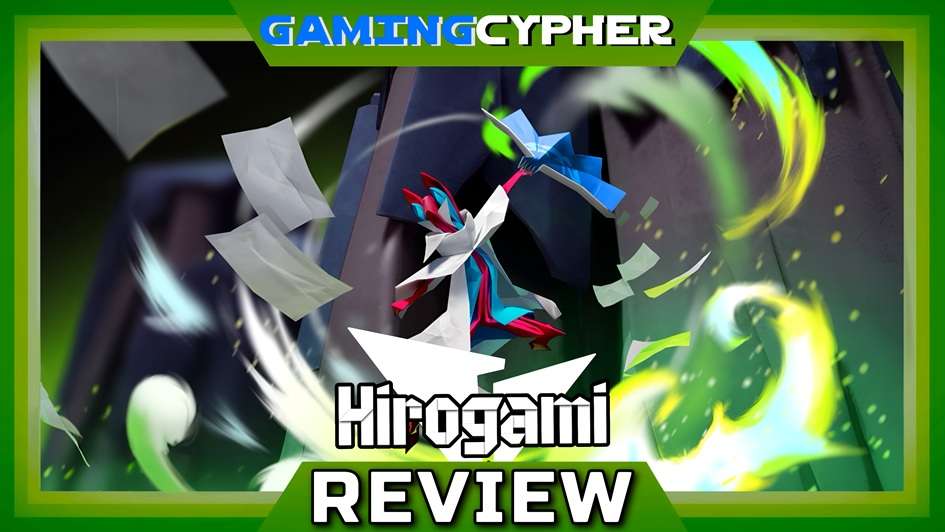
The setup is simple yet evocative: a malevolent digital force known as the Blight has invaded, threatening to unravel the papercraft realm. As Hiro, it’s your job to push back against this corruption, restore balance, and save the people of Shishiki village. On paper (pun may have been intended), it’s a promising narrative hook, but in practice, the storytelling never really builds much momentum. Cutscenes and lore snippets exist, but they feel like background dressing rather than a meaningful journey. I wanted to care more about Hiro’s mission, but the game doesn’t provide enough emotional pull to make that happen. Where “Hirogami” shines brightest is in its presentation. The art direction is stunning, with every landscape, character, and creature carefully folded into existence. Whether it was wandering through sunlit forests made of textured paper or gliding across chasms as a folded plane, I never stopped admiring the creativity behind the visuals. That sense of fragility and impermanence really sells the theme, and on PS5 the sharp textures and smooth performance made it easy to get lost in the spectacle. Accompanying that visual style is a lovely soundtrack composed with traditional Japanese instruments. The music adapts well to different scenarios, shifting from serene to tense in ways that always felt appropriate. If nothing else, “Hirogami” nails its atmosphere.
The gameplay loop builds on that aesthetic by giving Hiro the ability to transform into various animal forms. Each form brings a distinct traversal mechanic that opens up the world in fun ways. The Armadillo form lets you roll through obstacles, the Frog lets you leap to hard-to-reach spots, and the Ape can swing and pound enemies with brute force. Switching between these transformations to solve environmental puzzles and explore hidden areas was easily my favorite part of the experience. The creativity on display in how these forms integrate into level design reminded me why platformers can be so satisfying when exploration is rewarded. That said, the execution doesn’t always match the ambition. Platforming, while serviceable, often feels messy in its precision. Jumping between forms sometimes requires more fiddling than finesse, and there were moments where switching mid-platforming sequence became more frustrating than fluid. The game does offer secrets and optional challenges for those who want to push themselves, but I sometimes found the control quirks getting in the way of my desire to fully explore.
Combat, unfortunately, is the weakest link in “Hirogami.” Armed with Hiro’s paper fan and a handful of transformation-based abilities, fights against the Blight start off feeling novel but quickly fall into repetition. The pacing is slow, and encounters drag on longer than they should. Even though the combat system asks you to mix in different forms and tactics, it rarely feels sharp or rewarding. This becomes especially apparent during the final boss, which turned into a real slog for me. It’s not that the fight was impossible; it just overstayed its welcome and left me feeling more drained than exhilarated. For a game so grounded in elegance, combat felt like an unrefined fold in an otherwise crisp design. Despite these shortcomings, I don’t want to undersell what “Hirogami” accomplishes. It’s rare to see a platformer take such a specific cultural art form and build an entire world out of it. The care that went into crafting environments and designing transformations is obvious, and it’s those aspects that kept me invested even when the mechanics didn’t always hold up. For players who value style, atmosphere, and exploration, there’s a lot here to admire. For those who need tighter platforming or more engaging combat, it might leave you wanting more.
At the end of the day, “Hirogami” feels like a game with a beautiful concept that occasionally stumbles in execution. The origami theme, animal transformations, and visual style make it stand out from the crowd, but the uneven platforming and sluggish combat stop it from reaching its full potential. I still enjoyed my time with it, even if I left wishing the folds had been just a little cleaner.
For more information, visit HERE
Related: Nick Navarro Reviews

Gaming since I was given an original Nintendo as a kid. I love great storytelling and unique ingenuity. When both collide in a single game, I'm a happy gamer. Twitter/IG @NickNavarro87






More Stories
Dave The Diver: In The Jungle DLC Review for PlayStation 5
Crushed in Time Review for Steam
Teenage Mutant Ninja Turtles: Empire City Review for Steam VR