
“Romeo Is A Dead Man” Review by Nick Navarro
From the moment space-time itself is shattered, “Romeo Is A Dead Man” announces that it has no interest in playing things safe. Grasshopper Manufacture’s first brand-new title in years immediately leans into excess, contradiction, and chaos, delivering an experience that feels deliberately unpolished yet unmistakably personal. Led by Suda51, this is a game that thrives on unpredictability, constantly shifting tone and mechanics while daring the player to keep up. It’s messy, strange, and frequently brilliant, often all at once.
I take control of Romeo Stargazer, a man caught permanently between life and death after a catastrophic incident leaves him mortally wounded. Saved by the Dead Gear Life Support System, an invention created by his scientist grandfather Benjamin, Romeo becomes a living time paradox, an event that ends up shattering the space-time continuum itself. That disaster places him in the ranks of the FBI’s Space-Time Police, where he’s tasked with hunting down criminals exploiting the fractured universe. At the same time, Romeo is searching for answers surrounding the disappearance of his girlfriend, Juliet Dendrobium, and it quickly becomes clear that her fate is deeply entangled with the larger collapse of reality.
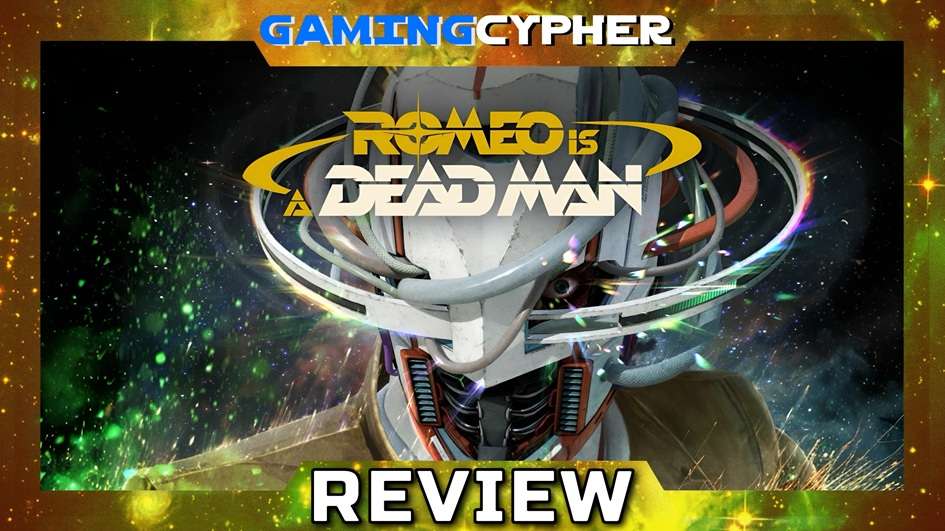
Structurally, “Romeo Is A Dead Man” is split into chapters and runs roughly ten to twelve hours, depending on how much time I spend engaging with optional content. The pacing benefits from this approach, allowing the main story to surge forward while side missions and activities provide breathing room when needed. The narrative rarely settles into anything resembling normalcy, jumping between cosmic sci-fi, emotional character beats, and outright absurdity without warning. It doesn’t always explain itself cleanly, but that ambiguity often feels intentional rather than careless. Combat blends hack-and-slash action with third-person shooting, giving Romeo access to both swords and firearms that can be swapped on the fly. Encounters throw waves of enemies my way, demanding constant movement and aggression. Defeating foes allows Romeo to absorb their blood, which fuels his signature special move, Bloody Summer, an instant-kill attack capable of turning the tide of even the most overwhelming fights. It’s a mechanic that rewards momentum and risk-taking, encouraging me to stay on the offensive rather than playing defensively.
As the story progresses, Romeo’s weapons can be upgraded and altered, offering modest customization that helps keep combat engaging against increasingly dangerous enemies. Doing these upgrades in-between levels on the Space-Time Police’s ship, also the game decides to turn into a 16-bit game in these moments, and it’s actually a pretty rad choice. While the core loop is satisfying, it’s also clear that the combat system doesn’t always feel as refined as modern action games in the same genre. Some encounters can feel repetitive, and certain sections drag longer than they need to. Still, the sheer variety of scenarios, enemy designs, and tonal shifts helps prevent the experience from growing stale.
Outside of combat, the game frequently detours into side activities and retro-style minigames that feel ripped straight out of Grasshopper’s eccentric design playbook. These moments range from charming distractions to bizarre curveballs that completely derail the pace, but they contribute heavily to the game’s identity. “Romeo Is A Dead Man” often feels less like a traditional action-adventure and more like a playable digital art exhibit, one that constantly experiments with form and presentation even when it risks alienating the player. Visually and tonally, the game is unapologetically weird. Every environment, character, and interface element feels handcrafted with a specific attitude in mind, even when performance issues and technical hiccups threaten to pull me out of the experience. There are moments where repetition sets in, where certain gameplay ideas overstay their welcome, and where the seams of the game’s budget become noticeable. Yet despite these flaws, the overall vision remains confident and cohesive in its own strange way.
By the time I reached the credits, it was clear that “Romeo Is A Dead Man” isn’t a game designed to appeal to everyone; objectively, this is probably a strong 7/10 video game. Its chaos, uneven pacing, and technical shortcomings are impossible to ignore, and a more detached evaluation would place it firmly in the realm of a competent but imperfect action game. However, what it lacks in polish, it more than makes up for in personality. This is a game overflowing with imagination, wild ideas, and an infectious creative energy that refuses to be sanded down into something safe or marketable. Somewhere along the way, its rough edges stopped bothering me and started feeling like part of the charm. It doesn’t play like a blockbuster, and it never pretends to be one, but its commitment to creativity left a lasting impression. Long after finishing it, I found myself still thinking about its characters, its risks, and its refusal to conform, and that’s why, flaws and all, it ultimately won me over. So for me, “Romeo Is A Dead Man” deserves a higher score.
9/10
For more information, visit HERE
Related: Nick Navarro Reviews

Gaming since I was given an original Nintendo as a kid. I love great storytelling and unique ingenuity. When both collide in a single game, I'm a happy gamer. Twitter/IG @NickNavarro87




More Stories
Red Dead Online this Month Features Bonuses for Every Role, Double Rewards for Every Bounty, Collector Set Sales, and More
theHunter: Call of the Wild New ‘Peru Hunting Reserve’ DLC Drops June 16 for PC, Xbox, and PlayStation
007 First Light Review for PlayStation 5