
First Impressions Review for Menace on Steam Early Access
developed by Overhype Studios and published by the GOAT Hooded Horse
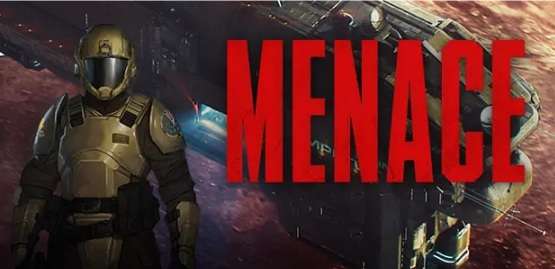
TL:DR: Chewed me up, spit me out, and left me wanting more. 10/10
Menace just launched into early access on February 5, 2026, and honestly, I’m surprised because this did not feel like early access. This felt like I was drafted into Space Force, given a rifle, and thrown face-first into the dirt, where I was immediately pinned down by pirates.
Story
Even though I felt like a grunt, I was actually the commander of an elite military unit aboard a ship called the Impetus. My mission is to pacify the remote, lawless frontier colony called the Wayback. Unfortunately, during the backstory, all comms are cut off, leaving me and my squaddies stranded with nothing else to do but use up all our ammo.
With absolutely no idea what I am doing (who put me in charge?), I now have to navigate factions while fighting pirates, alien life forms, and something larger and more…menacing.
The devs have been upfront that the main narrative will be fleshed out over the course of the estimated year-long early access. I have not been able to dig into the story too much, more about why in the gameplay section, but so far the story feels full of all of my favorite sci-fi tropes: a little bit Mass Effect, a little bit Starship Troopers, a dash of Children of Time, with a sprinkle-sprinkle of Annihilation.
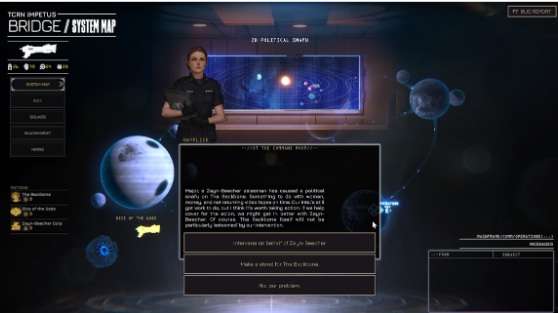
What’s there now does a solid job of grounding the world and giving the missions a sense of purpose. There are also these little RPG-style choose-your-own-adventure moments where someone super sus gets pulled aboard your ship, and you decide whether to trust them or send them out the airlock. These small story beats have done a lot of heavy lifting in terms of world-building and personality in EA.
Gameplay
Disclaimer: Now I am going to outline what I know about the gameplay, with the massive caveat that I don’t know a lot!
The first thing to understand is that Menace will hand you a gun, but it will not hold your hand.
The tutorial is barebones. It will teach you how to move and shoot, and that’s roughly it. Everything else from the supply system to suppression mechanics, faction management, black market bartering, and vehicle rules—all of that gets explained through dense walls of text in the menus, which isn’t particularly effective. New players will almost certainly spend their first several hours confused and losing badly. The developers have acknowledged this, and a more substantial tutorial is on the roadmap, which is good, because right now the gap between “what the tutorial teaches” and “what you actually need to know to function” is enormous.
Squaddies
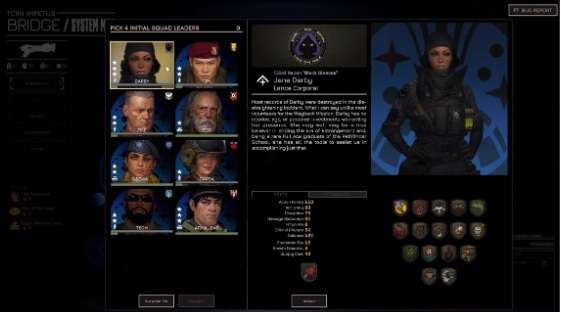
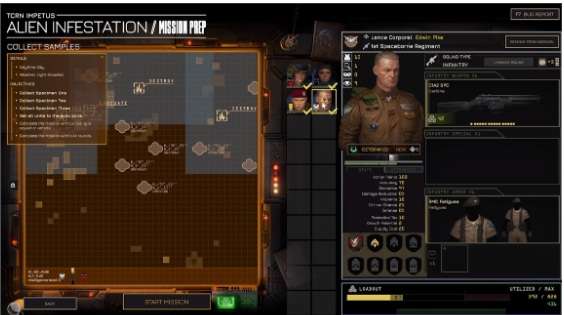
Each unit you field isn’t a single soldier, it’s an entire squad led by a squad leader. The other soldiers, called squaddies, don’t act independently. Instead, they represent the squad’s health, firepower, and staying power. Lose a squaddie, and that squad’s health bar shrinks. You can watch individual soldiers go down or crawl away from the battlefield in real time, which adds a visceral weight to every exchange of fire. Squad leaders are your real investment. They have skill trees, unique abilities, personalities, and permanent death (RIP Commander Lim). If a leader falls and you can’t reach them before the mission ends, they’re gone forever.
You start each campaign by choosing four squad leaders from a pool of eight, and this decision matters more than it might initially seem. Some leaders are pilots, and they need to be in a vehicle to function at all. Others have abilities that complement specific playstyles or mission types. Learning who does what and building a roster that covers your bases is one of the deeper long-term puzzles the game presents.
Prep
Before you ever fire a shot, Menace is already testing you. Pre-mission loadout is genuinely half the game. Every piece of equipment costs supply points, and each mission has a hard supply cap. You can’t just bring your best stuff to every fight. You need to think about what enemy types you’re facing, what the terrain might look like, whether you’ll need armor-piercing rounds or suppression-focused weapons, and whether vehicles are viable or a liability. Getting this wrong can doom a mission before it starts. Getting it right feels like cracking a puzzle.
The black market adds another layer to this. After missions, enemies drop loot you can barter for better weapons, upgraded vehicles, new accessories, and replacement squaddies. The economy starts off brutal. You begin with genuinely terrible equipment and very little to work with, and the uphill climb through the early hours is real. But as the gears start turning and you acquire better gear and figure out the barter system, there’s a satisfying sense of progression.
Operations and Mission Structure
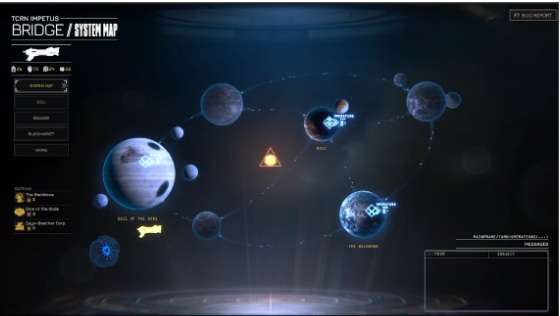
Rather than individual standalone missions, Menace groups its battles into operations as a series of back-to-back tactical missions strung together in a roguelike chain. You pick a path through the operation, each mission described with rough difficulty indicators and optional objectives. Optional objectives affect your star rating and ultimately your rewards, so there’s always tension between playing it safe and pushing for a better outcome.
Between operations, you return to your ship, repair and upgrade it using components earned in the field, build new ship systems that provide passive bonuses, and manage your faction standings. The faction system is tied to which operations you take and how well you do, and as trust grows with certain factions, new ship upgrades and equipment options unlock. It layers in a light strategic metagame that gives the combat real stakes.
Combat
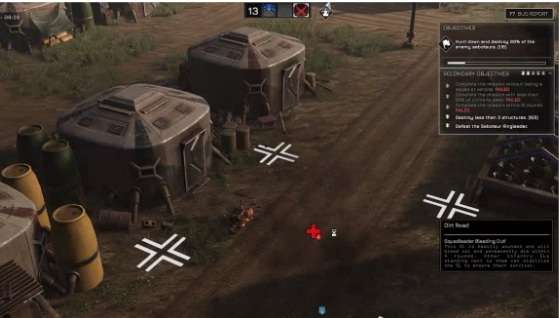
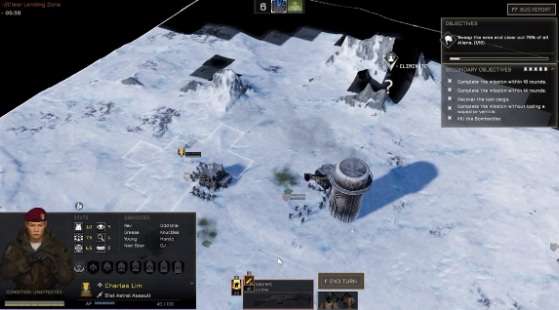
Turn order in Menace works differently from most tactics games. There’s no initiative system. On your turn, you can choose to activate any of your squads in any order, but once you start moving a squad, you commit to finishing their actions.
Positioning is everything. Cover is directional, meaning a barrier protects you from the front but leaves you exposed from the sides and rear. Dense terrain like forests can conceal you entirely, letting you slip past enemy sightlines. Every tile you move to is a calculated risk. Accuracy matters enormously, and there are no guarantees. You’re forced to play slowly and deliberately.
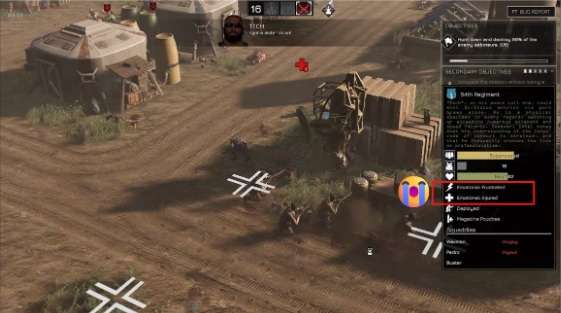
The suppression system is one of the most interesting mechanics in the game. Rather than focusing purely on killing enemies, you’re often trying to pin them down. Suppression has three tiers, and fully pinned enemies can’t act at all; they can only crawl away (I know because I kept getting pinned!). This creates a dynamic where you’re constantly coordinating squads to suppress one group of enemies while another squad flanks and finishes them. And suppression works both ways. Getting your own squads pinned down and unable to act is a genuinely horrible feeling.
The most important thing to know before getting started: losing a mission is not the end of your run.
If you are losing an engagement, do not start a new game thinking you’ll figure out more and be better next time! It doesn’t matter if you’re crawling to the evac point; just finish.
When reviewing a game, I will often restart, restart, restart as I figure out the mechanics and learn how the game should be played. That approach did not serve me in Menace, because losing an encounter will still progress the story and still hold the potential to bring home loot that can be traded on the black market.
Overall
Menace is more demanding than I was fully prepared for.
The bones are great! And I absolutely want to get my hands on the final version. This game tickled the dopamine centers of my brain, and I want more. There’s a compulsive quality to the loop of prepping your squad, running an operation, surviving (or barely not surviving), and rebuilding for the next one that’s hard to shake. Well done, Overhype Studios, and slow clap for Hooded Horse for helping to bring another banger to market.
For more information, visit Steam Early Access.
Related: Reviews by Lord Tevildo

Equal-opportunity gamer goblin.
Completionist role-player, lore-lover, stealth archer for life.
I review games by intent, audience, and design, not marketing or hype. I forgive ambition and value games that trust the player to think.
Big nerd. No apologies.


More Stories
Resonance: A Plague Tale Legacy Preview for Steam
Fatshark Launches Skitarii Class for Warhammer: 40,000 Darktide Plus the Live Dark Rites Event
tinyBuild Announces that New Multiplayer FPS with Mechs, SAND: Raiders of Sophie, Now Out on Steam Early Access