
Dragon Quest VII: Reimagined” Review by Nick Navarro
Some games feel less like entertainment and more like time capsules, and returning to “Dragon Quest VII: Reimagined” stirred up that exact sensation for me. I still remember getting lost in the original as a kid, chipping away at its massive adventure with so much curiosity and sometimes a little less patience, so stepping back into Estard carried a quiet emotional weight before I even touched the controls. This reimagined version doesn’t just invite me to revisit those memories; it challenges them, reshaping a famously slow-burning JRPG into something far more approachable for modern players.
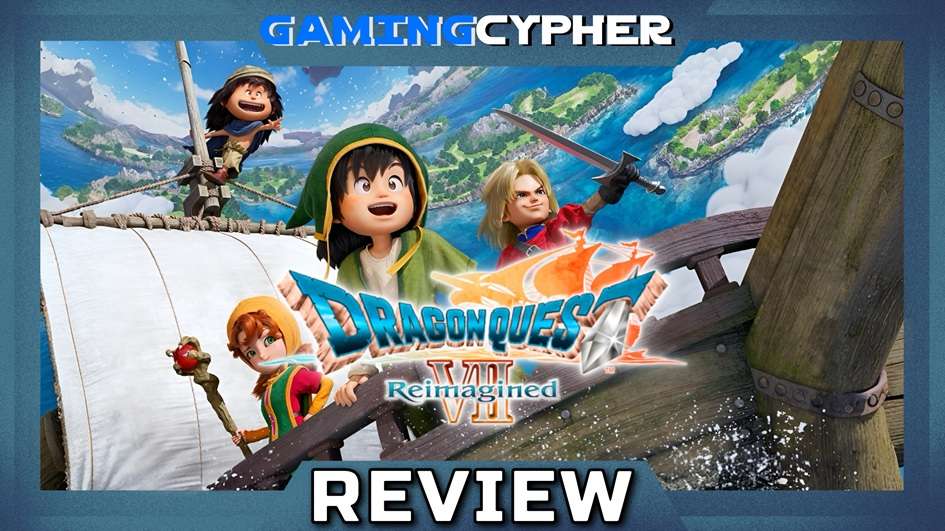
The premise remains largely intact. You begin life as the son of a humble fisherman on the peaceful island of Estard, a place believed to be the only land left in the world. That fragile sense of normalcy is quickly unsettled once you and your childhood friends uncover the Shrine of Mysteries, triggering a journey through time itself. What follows is a sprawling adventure centered on restoring lost islands, confronting the tragedies of the past, and watching those changes ripple forward into the present. Even decades later, the structure of “Dragon Quest VII” still feels distinctive, leaning heavily on self-contained stories that gradually weave together into something larger and more emotionally resonant. Visually, “Dragon Quest VII: Reimagined” immediately sets itself apart. The new diorama-inspired art style gives the world a handcrafted charm that feels warm and storybook-like without sacrificing detail. Environments pop with color, from lush forests to ancient ruins, while Akira Toriyama’s unmistakable character designs retain their playful expressiveness. Monsters, townsfolk, and companions all felt like they belonged to a living fairy tale, and I often found myself lingering in restored islands just to soak in the scenery. It’s a striking visual overhaul that manages to feel respectful rather than revisionist.
Exploration is still driven by the series’ unique fragment system, where scattered stone shards unlock portals to sealed-off eras. Solving environmental puzzles, helping civilizations in the past, and then witnessing their impact on the present remains one of the game’s most satisfying loops. Each restored island functions as its own vignette, offering moments of joy, heartbreak, and moral complexity. However, the reimagined structure is noticeably more streamlined, with clearer objectives and a smoother narrative flow designed to keep players moving forward. Combat has undergone the most dramatic transformation. Battles are faster and more fluid thanks to speed adjustments, auto-battle options, and fewer interruptions between turns depending on chosen tactics. The vocational system returns with added depth, granting characters unique abilities tied to their chosen roles, ranging from powerful offensive techniques to crucial support skills. The new Moonlighting mechanic allows two vocations to be equipped at once, opening the door to hybrid builds that encourage experimentation. It’s flexible, engaging, and undeniably fun to tinker with.
Quality-of-life improvements extend beyond combat. Weaker enemies can be dispatched instantly with preemptive strikes, dramatically reducing grind during backtracking. Menus are cleaner, pacing is tighter, and several notoriously slow sections from the original have been shortened or reworked. From a purely mechanical standpoint, this is the most accessible version of “Dragon Quest VII” to date, and newcomers will likely appreciate how little friction stands between them and the story. That accessibility, however, comes at a cost. As someone who remembers the sense of discovery and uncertainty that defined the original experience, I couldn’t shake the feeling that the game occasionally holds my hand a bit too tightly. Objectives are clearly signposted, guidance is constant, and the challenge curve feels noticeably softer. While this makes for a smoother journey, it also trims away some of the mystery and satisfaction that came from figuring things out on my own. What was once a daunting, almost intimidating JRPG epic now feels more like a guided tour through its greatest moments.
This shift in philosophy places “Dragon Quest VII: Reimagined” in an interesting middle ground. It may feel too modernized for players who cherish the series’ older, more demanding entries while still appearing old-fashioned to those accustomed to contemporary RPG conventions. Yet despite that tension, the game’s heart remains intact. The short-story structure allows individual islands to leave lasting impressions; the soundtrack reinforces both whimsy and melancholy; and the overarching theme of restoring what was lost still hits with surprising emotional force. In the end, “Dragon Quest VII: Reimagined” feels like a thoughtful, if slightly overprotective, reinterpretation of a beloved classic. It delivers better pacing, beautiful visuals, and a mountain of smart refinements, even if it smooths out some of the rough edges that once defined the experience. For new players, it’s an inviting entry point into the franchise. For longtime fans like me, it’s a reminder that while nostalgia may color my memories, seeing an old favorite reborn, flaws and all, can still be deeply rewarding.
8.5/10
For more information, visit HERE
Related: Nick Navarro Reviews

Gaming since I was given an original Nintendo as a kid. I love great storytelling and unique ingenuity. When both collide in a single game, I'm a happy gamer. Twitter/IG @NickNavarro87






More Stories
Darwin’s Paradox! Review for PlayStation 5
GDC 2026: Ballgame Impressions for Steam
GTA Online’s Neighborhood Watch Event is Back Plus New Law Enforcement Vehicles, Time-Limited Outfits, and Much More