
“Dreams of Another” Review by Nick Navarro
When “Dreams of Another” was first revealed during the PlayStation State of Play back in February, I was immediately intrigued. Q-Games has always been one of those studios that marches to its own beat; whether it’s the minimalist tower defense of “PixelJunk Monsters” or the dreamlike strangeness of “The Tomorrow Children,” they never fail to bring a distinct personality to their games. So, when I heard that their latest project was built around the idea of “No Creation Without Destruction,” I knew I had to experience whatever strange, beautiful concept they’d dreamed up this time.
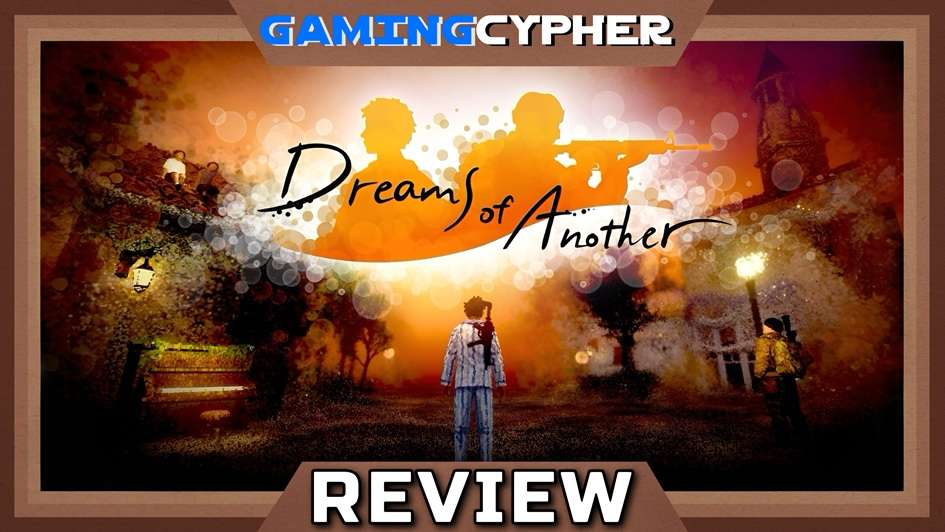
At its core, “Dreams of Another” is a third-person exploration-action game, but calling it that almost feels too conventional. Rather than destroying enemies or clearing levels, your weapon creates. Every shot you fire doesn’t break apart the world; it builds it. Mountains, bridges, trees, and shimmering pathways bloom into existence at your command. It’s a fascinating reversal of traditional shooter logic, transforming violence into artistry. There’s something deeply satisfying about watching the world assemble itself piece by piece as you move through it, like painting with the act of play itself. The world of “Dreams of Another” feels like it’s being sculpted from memory. Built using point cloud rendering technology, its landscapes appear soft and ephemeral, half-formed visions suspended between dreams and reality. There’s an almost meditative quality to simply walking through it, watching glowing clusters of light resolve into recognizable shapes. The aesthetic reminds me of experimental games over a decade ago, when developers seemed willing to chase feelings rather than formulas. It’s a game that doesn’t just look different; it feels different.
The story follows two characters: the Man in Pajamas and the Wandering Soldier. Their paths intertwine as you explore this surreal space, uncovering fragments of their memories and reflections on the world around them. The narrative isn’t delivered in a straightforward way. Instead, it unfolds through abstract conversations, symbolic imagery, and philosophical musings. You’ll encounter sentient objects—lamps, chairs, and clocks—that speak with humor and melancholy about human existence. Some of their dialogue genuinely made me smile; other lines drifted past like a dream I couldn’t quite remember after waking. The writing walks that fine line between poetic and pretentious, and depending on your mood, it can lean in either direction. Q-Games has always embraced experimentation, and “Dreams of Another” doubles down on that philosophy. It’s not an easy game to categorize. There’s light puzzle-solving, gentle platforming, and exploration that feels more emotional than mechanical. I wouldn’t call it difficult, but it’s certainly introspective. It’s the kind of game that wants you to feel something rather than achieve a high score or chase collectibles. That approach won’t appeal to everyone, but I found it refreshing in an era obsessed with constant stimulation.
The soundtrack, composed by director Baiyon himself, ties everything together beautifully. It’s sparse, ambient, and reflective, full of strange textures and lingering melodies that perfectly match the game’s floating dreamscapes. At times it reminded me of early ambient electronic works, with a pulse that feels organic and human. Combined with the visuals, the music turns the whole experience into something closer to an art installation than a traditional video game. I played “Dreams of Another” on PlayStation 5, though it’s also playable in PSVR2. I don’t own a VR headset, but I can easily imagine how striking it must be to wander through its glowing worlds in virtual reality. The sense of immersion, of literally building the world around you with your hands, seems like it would elevate the concept even further. Still, even without VR, the sense of scale and atmosphere comes through clearly, thanks to the game’s art direction and lighting.
For all its creativity, however, “Dreams of Another” isn’t without its flaws. Its pacing can feel uneven, and there are moments when the repetition starts to dull the magic. The story’s fragmented structure occasionally slips into confusion, leaving you to piece together meaning without much guidance. I appreciate when a game trusts players to interpret its message, but here it sometimes feels like it’s hiding behind ambiguity for its own sake. I often found myself wishing for a stronger narrative throughline to match its thematic depth. Despite that, I never stopped admiring the ambition behind it. Q-Games has built something that feels deeply personal, an interactive reflection on creation, memory, and the fragility of imagination. Like a half-remembered dream, its images linger long after the credits roll, even if you’re not entirely sure what they meant.
“Dreams of Another” won’t be for everyone. Its abstract storytelling and minimal challenge will likely divide players, but for those open to its slow rhythm and surreal worldbuilding, it’s a mesmerizing journey. It doesn’t fully realize its potential, but it dares to be different, and that’s worth celebrating. I walked away from it both confused and moved, two emotions I’m more than happy to experience when a game tries to speak from the heart.
7.5/10
Related: Nick Navarro Reviews

Gaming since I was given an original Nintendo as a kid. I love great storytelling and unique ingenuity. When both collide in a single game, I'm a happy gamer. Twitter/IG @NickNavarro87




More Stories
GTA Online’s Neighborhood Watch Event is Back Plus New Law Enforcement Vehicles, Time-Limited Outfits, and Much More
Rock It Games Launches Bases Loaded II: Second Season and Goal! Two for Nintendo Switch and PlayStation 5
Outright Games Celebrates Easter 2026 with “Big Smiles This Spring” Sales Event