
Metal Gear Solid Δ: Snake Eater Review for PlayStation 5
When I sat down with “Metal Gear Solid Δ: Snake Eater,” I knew I wasn’t just booting up another remake; I was stepping back into one of the most celebrated chapters in video game history. The original “Metal Gear Solid 3” was already legendary when it was released in 2004, and over the years it became cemented as the emotional cornerstone of the entire saga. This new version, rebuilt in Unreal Engine 5, arrives with a tall order: to modernize a classic while refusing to compromise its identity. After spending many hours stalking the jungle and revisiting Snake’s transformation into Big Boss, I can confidently say that it’s a faithful, meticulously crafted restoration, though not without its quirks and reminders of the past.
The story remains untouched, and that’s for the best. Set in 1964, it places Naked Snake in the middle of a Cold War flashpoint deep in Soviet territory. His mission is multifaceted: rescue rocket scientist Nikolai Stepanovich Sokolov, sabotage an experimental nuclear-equipped weapon, and eliminate his mentor, The Boss, who has defected to the enemy. It’s an assignment heavy with betrayal, legacy, and political maneuvering, and it lays the foundation for everything that would come later in the “Metal Gear” timeline. Even revisiting it now, I was struck again by how weighty this particular story feels, balancing pulpy spy-thriller energy with a deeply personal conflict between student and teacher.
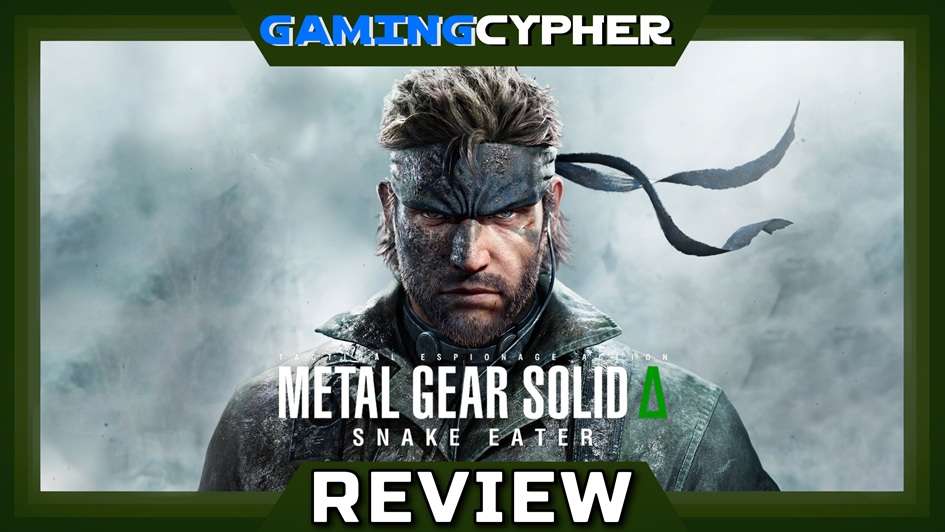
The biggest leap forward comes from the visuals. The Soviet jungle has never looked this alive, its layers of foliage stretching out in all directions with remarkable detail. Shafts of sunlight pierce through dense canopies, raindrops glisten on leaves, and swamps bubble with unsettling realism. At times, the environments are so richly rendered that I found myself pausing simply to take in the view. Gameplay-wise, it’s clear Konami wanted to preserve the core identity while trimming down rough edges. Survival systems return intact, you still need to manage camouflage, tend to wounds, and ration rations, but the interface has been streamlined to be less clunky. I appreciated that the challenge of the original remains; I still had to think carefully about whether to sneak past patrols or risk a confrontation, but the menus and controls no longer slow the pacing as much as before.
The addition of a modernized control scheme is another welcome option. With over-the-shoulder aiming and smoother inputs, combat and stealth feel more natural, closer to contemporary third-person action games. For purists, the original “Legacy” control style is available as well, and I found myself toggling between them depending on the situation. It’s a smart inclusion, one that makes the game accessible to newcomers without alienating veterans. One detail that stood out to me was the new damage system. Injuries now leave lasting marks on Snake’s body, from cuts and burns to bullet wounds that scar over time. His clothes tear and stain dynamically, giving the sense that every mistake leaves a visible reminder of your struggle. It’s subtle, but it adds weight to the survival theme in a way the PS2 version could only suggest.
Of course, “Snake Eater” has always balanced its serious espionage tone with eccentric, often humorous flourishes, and those make a return here as well. Snake vs. Monkey mode is back, still as goofy and self-aware as it was in the original. After completing the story, you’ll get access to the bizarre “Guy Savage” nightmare sequence, which has been remade as “Guy Savage Δ,” this time with input from PlatinumGames, giving it a slick and surreal energy that feels right at home as a bonus. I also found myself hunting down 8mm film reels for the Secret Theater, which unlocks intentionally ridiculous reinterpretations of certain scenes. These moments don’t just pad out the experience; they remind you that Kojima’s original work was as playful as it was profound. On the horizon, Konami is preparing to add FOX HUNT, a new online multiplayer mode designed around stealth-driven hide-and-seek. Unfortunately, it wasn’t available at launch, so I wasn’t able to test it. I’m curious to see whether it will become a staple for the community or just a short-lived experiment, but for now, the meat of the experience remains firmly in the single-player campaign.
That campaign still shines brightest in its boss encounters. Facing The End, with his legendary sniper duel across massive outdoor environments, is still one of the most memorable sequences in gaming. The Fear, The Pain, The Fury, and The Sorrow all return, each encounter benefiting from improved visuals and smoother mechanics. The Boss herself remains a towering figure, and her final battle with Snake retains the emotional punch it had nearly two decades ago. That being said, the remake isn’t flawless. I noticed some minor performance issues while playing on my PS5 Pro. Frame drops occasionally disrupted larger set pieces, and while they weren’t frequent enough to derail the experience, they were distracting in a game that otherwise feels polished. More significant, however, is the disconnect between the updated visuals and the untouched voice acting. The performances are iconic, and I understand the reluctance to alter them, but hearing dialogue written in the early 2000s delivered verbatim against photorealistic character models creates a strange tension. Lines that once felt natural can now come across as overly stiff or melodramatic, highlighting just how much writing standards have shifted in the past two decades.
This tension feeds into what I see as the remake’s biggest strength and biggest limitation: its faithfulness. Konami didn’t attempt to rewrite history or reinterpret Kojima’s vision. Instead, they chose to polish it, modernize mechanics, and deliver it in the highest fidelity possible. That means it captures the brilliance of the original, but it also carries forward some of the clunkier or dated elements. Depending on your perspective, that’s either a show of respect or a missed opportunity. Despite those caveats, I was continually reminded why “Metal Gear Solid 3” is considered one of the greatest games ever made. The mixture of espionage, survival, and cinematic storytelling is still unmatched in its scope. The remake allows a new generation to experience it without fighting against the technical limitations of 2004 hardware, and for returning fans, it offers a faithful way to relive every twist, every codec call, and every haunting moment of Snake’s evolution into Big Boss.
By the time the credits rolled, I came away with a clear impression: “Metal Gear Solid Δ: Snake Eater” isn’t here to redefine the series. It doesn’t introduce sweeping changes or rewrite the script. Instead, it’s a respectful modernization, a chance to appreciate one of the medium’s most important works in its sharpest, most immersive form yet. It may be safe, even overly cautious at times, but it succeeds in its primary goal: preserving the legacy of a classic while giving it a coat of polish that ensures it can stand tall in 2025. For me, this remake is both a love letter to the past and a reminder of how far games have come. It doesn’t erase the wrinkles of its original design, but it frames them in a way that feels authentic. Whether you’re a long-time fan eager to see Naked Snake’s story reborn or someone stepping into the jungle for the first time, “Metal Gear Solid Δ: Snake Eater” remains one of gaming’s defining adventures, now sharper, louder, and more vivid than ever.
8.5/10
For more information, visit HERE
Related: Nick Navarro Reviews

Gaming since I was given an original Nintendo as a kid. I love great storytelling and unique ingenuity. When both collide in a single game, I'm a happy gamer. Twitter/IG @NickNavarro87



More Stories
MARVEL MaXimum Collection Review for PlayStation 5
GDC 2026: Tides of Annihilation Impressions
Space Warlord Baby Trading Simulator Review for Xbox Series S/X