
“People of Note” Review by Nick Navarro
A game about music where every note matters could have easily leaned too far into gimmick territory, but “People of Note” never feels like it’s playing a one-hit tune. Instead, it builds something far more ambitious, a full-fledged RPG that treats music not just as a theme, but as the very fabric of its world, mechanics, and identity. I was completely shocked at how confidently the game commits to its premise. The world of Note isn’t just “music-inspired,” it’s completely structured around genre identity, from the dusty rock landscapes of Durandis to the neon-soaked EDM sprawl of Lumina. Each region feels distinct not only visually, but culturally, with characters who embody their musical roots in both personality and gameplay style. That sense of cohesion goes a long way in making the world feel believable, even when it’s built on something as abstract as musical genres.
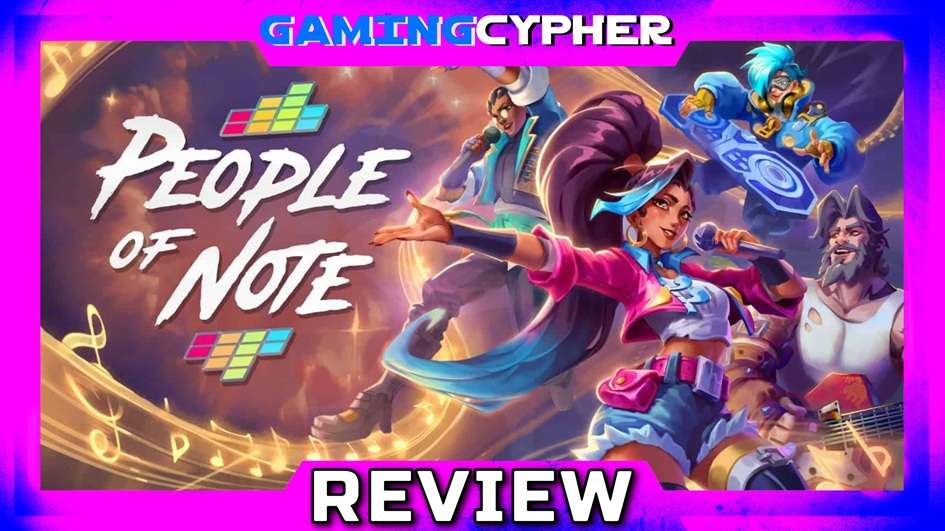
At the center of it all is Cadence, a pop singer who’s been denied entry into the prestigious Noteworthy Song Contest. It’s a simple setup, but the journey that follows gives it real weight. Watching her step out of her comfort zone and recruit musicians from wildly different backgrounds becomes the emotional backbone of the experience. This isn’t just about forming a band, it’s about breaking out of creative stagnation and embracing collaboration, even when it challenges your identity. The narrative leans heavily into visual novel-style storytelling, and I’d say that’s both one of its biggest strengths and a potential sticking point depending on your preferences. I’d say most of the experience is dialogue-driven, and thankfully, the writing carries that load exceptionally well. The characters are genuinely likable, and the script is packed with clever musical puns and thoughtful commentary on artistic expression, fame, and the tension between authenticity and mass appeal. It also deserves credit for how inclusive and positive its tone is, it never feels forced, just naturally woven into the world and its people.
When the game does shift into combat, it manages to stay true to its musical identity without overcomplicating things. Battles are turn-based at their core, but they incorporate light rhythm mechanics that reward timing your inputs to the beat. It’s not as rhythm-heavy as I initially expected, and I’ll admit I wanted a bit more depth on that front, but what’s here works well. Combat conditions, where the genre of the music can shift mid-battle, keeps encounters feeling fresh and encourages you to think about party composition in interesting ways. Speaking of party composition, the band-building aspect is easily one of my favorite parts of the game. Each new member you recruit brings their own genre-specific abilities and playstyle, and experimenting with different combinations leads to some genuinely fun strategies. The “musical mashup” attacks, which blend genres together for powerful effects, are a highlight both mechanically and thematically. They reinforce the game’s central idea that great art often comes from unexpected collaboration.
Progression systems are fairly standard for the genre, leveling up, equipping abilities, and customizing characters with gear, but they’re streamlined in a way that keeps the pacing tight. I never felt bogged down by menus or unnecessary complexity, which is especially important in a game where the story is such a major focus. Dungeon design falls somewhere in the middle. The environmental puzzles are generally clever without being frustrating, and I appreciated that the game gives you the option to turn them off entirely if they’re not your thing. That level of customization extends to other aspects of the experience as well, which makes “People of Note” surprisingly accessible. Whether you want a more relaxed, story-focused playthrough or something a bit more strategic, the game lets you tailor it to your preferences.
If there’s one area where the game slightly underdelivers, it’s in its overall challenge level. Even with the more strategic elements in play, I found most encounters to be on the easier side. It didn’t detract from my enjoyment too much, but I rarely felt truly tested, which might disappoint some of you looking for a more demanding RPG experience. Of course, it would be impossible to talk about “People of Note” without highlighting its soundtrack. The music here isn’t just good, it’s essential. From ambient tracks that set the tone of each region to full-blown musical numbers that push the story forward, every piece feels purposeful. The variety is impressive, and the way the game blends genres during combat or key moments is genuinely satisfying. There were more than a few tracks I caught myself wishing I could loop outside the game.
What surprised me most is how consistently everything comes together. The story, the mechanics, the world design, and the music all feel like they’re part of the same composition rather than separate elements competing for attention. The length as well, for an RPG the length is on the shorter side, but still feels plenty long enough and doesn’t overstay it’s welcome. Even when certain aspects, like the lighter difficulty or the relatively modest use of rhythm mechanics, don’t fully reach their potential, the overall experience remains incredibly cohesive. I went into “People of Note” with very little expectation, judging a book by its cover, I’ll admit the art style wasn’t really doing it for me, but it ended up being one of those games that will quietly stick with me for a while. It’s earnest without being naive, creative without being chaotic, and heartfelt without ever feeling overly sentimental. By the time the credits rolled, I realized I’d been smiling more often than not, and that’s not something I say lightly. If you’re someone who enjoys turn-based RPGs and has even a passing appreciation for music, there’s a good chance this one will resonate with you.
8.5/10
For more information, visit HERE
Related: Nick Navarro Reviews

Gaming since I was given an original Nintendo as a kid. I love great storytelling and unique ingenuity. When both collide in a single game, I'm a happy gamer. Twitter/IG @NickNavarro87



More Stories
Drop Duchy – Complete Edition Heading to Nintendo Switch and PlayStation 5 April 21
GDC 2026: The House of Hikmah Review for Steam
Realpolitiks II Review for Xbox Series X/S