
“Reanimal” Review by Nick Navarro
Few studios understand childhood fear quite like Tarsier Studios. After shaping the haunting worlds of “Little Nightmares” and “Little Nightmares II,” the team returns with “Reanimal,” a survival horror adventure that feels both familiar and boldly redefined. This time, the story centers on a brother and sister fighting to rescue their missing friends while escaping a warped version of the island they once called home. It’s a premise rooted in innocence corrupted, and from the moment I stepped onto that desolate shoreline, I could feel the weight of that corruption pressing in from every direction.
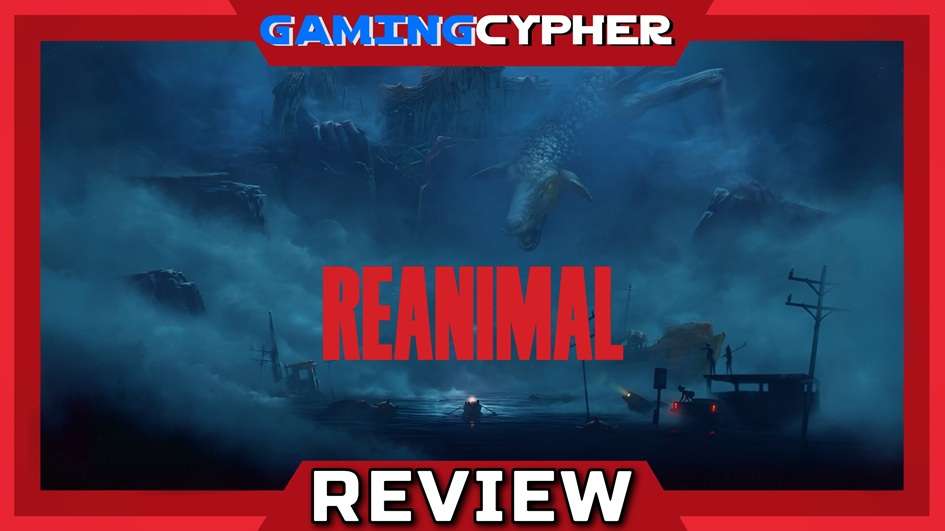
“Reanimal” is structured as a cinematic platformer with stealth elements and environmental puzzles woven throughout. Whether I was creeping past grotesque monstrosities or solving mechanical contraptions under pressure, the pacing rarely let up. The core hook is cooperation. The game is fully playable solo or in local and online co-op, and that design philosophy touches nearly every aspect of progression. In single-player, the second child is controlled by AI, sticking close and responding intelligently during traversal and puzzle sequences. In co-op, though, everything feels heightened. Communication becomes survival. One of the most striking technical decisions is the shared, dynamic camera system. Instead of splitting the screen, “Reanimal” keeps both characters framed together at all times. That might sound like a minor detail, but in practice it fundamentally reshapes how tension builds. The camera subtly pulls back when danger escalates, tightening the space between the characters and the threats that stalk them. It creates a sense of claustrophobia that feels deliberate and oppressive, as if the world itself refuses to let you breathe. Even in moments of quiet exploration, the framing keeps you aware that neither child can truly escape the other’s fate.
Exploration plays a bigger role here than I initially expected. Early chapters guide you down fairly direct paths, but eventually you unlock a boat that allows travel between different locations off the critical path. That addition introduces a light nonlinear structure, letting me revisit areas or uncover optional spaces that add texture to the fragmented narrative. The world design emphasizes environmental storytelling rather than exposition. Each broken structure, each flooded corridor, and each abandoned interior feels like a piece of a larger, unspoken tragedy. Visually, the game leans hard into grotesque reinterpretations of childhood memory. The monsters aren’t random horrors; their designs are centered around fragments of the siblings’ troubled past. That thematic cohesion makes every encounter feel personal rather than arbitrary. The imagery often takes something serene and twists it into something defiled. Peaceful landscapes are reshaped into suffocating gauntlets. Familiar domestic spaces become hunting grounds. It’s disturbing without relying on cheap jump scares, and I appreciated how the dread came from atmosphere rather than sudden noise.
Stealth sequences form the backbone of many encounters. Direct confrontation is rarely an option, so timing, positioning, and coordinated movement are essential. Some set pieces lean into cinematic chases, while others slow things down into careful, methodical evasion. At times, these sequences can feel slightly repetitive, particularly when similar patterns repeat across multiple chapters. Still, the consistent tension and visual creativity keep them from losing their impact entirely. Puzzle design is another area where “Reanimal” refines its formula. Most obstacles require both siblings to interact with the environment in complementary ways. One might hold a mechanism in place while the other slips through a narrowing gap. Some puzzles revolve around manipulating light, elevation, or movement timing. None of them feel overly complex, but they demand awareness and cooperation. In co-op, there’s a natural rhythm that you and player 2 need to get on quickly to succeed. In single-player, the AI does a commendable job of responding to prompts without getting in the way.
The tonal focus is unrelentingly grim. This is not a game interested in levity. The atmosphere is thick with dread from beginning to end, and the sound design reinforces that suffocating mood. Distant creaks, distorted echoes, and subtle environmental noise constantly remind you that something is watching. The music swells sparingly, allowing silence to do much of the heavy lifting. I often found myself holding my breath during extended stealth segments, not because of sudden scares, but because the world felt genuinely hostile. At roughly six to eight hours, the campaign doesn’t overstay its welcome. The pacing is tight, and there’s little filler. Still, I couldn’t help wanting more by the time the credits rolled. The world feels rich enough to support additional chapters (which are coming), and some of the ideas introduced late in the game I hope will be explored further in DLC. It’s a concise experience, but one that leaves you wishing for a slightly longer descent into its nightmare. What impressed me most is how “Reanimal” builds on the foundation that made Tarsier’s earlier work resonate without feeling derivative. The connective tissue is obvious in its tone and visual identity, yet the addition of cooperative play, expanded 3D environments, and more confident level design gives it a distinct personality. It doesn’t attempt to radically reinvent the cinematic horror platformer, but it evolves it with purpose.
By the end, I felt like I had walked through something harsher and more emotionally confrontational than the studio’s previous projects. The imagery lingers. The creature designs stay etched in memory. The shared camera, the oppressive spaces, and the quiet emphasis on sibling solidarity combine into something that feels deliberate and assured. “Reanimal” may be a short thrill ride, and some of its set pieces tread familiar ground, but its atmosphere, creature design, and seamless co-op integration elevate it into a worthy successor. Like a descent into a darkened rabbit hole, it’s the kind of experience that will stick with me long after I’ve put the controller down.
8.5/10
For more information, visit HERE
Related: Nick Navarro Reviews

Gaming since I was given an original Nintendo as a kid. I love great storytelling and unique ingenuity. When both collide in a single game, I'm a happy gamer. Twitter/IG @NickNavarro87




More Stories
Hozy Review for Steam
Mega Man Star Force Legacy Collection Review for PlayStation 5
MARVEL MaXimum Collection Review for PlayStation 5