
“Resident Evil Requiem” Review by Nick Navarro
The name Raccoon City still carries weight, and stepping back into its shadow in “Resident Evil Requiem” felt like reopening a wound the series has never truly let heal. Developed and published by Capcom, this eleventh mainline entry (also referred to as “Resident Evil 9”) doesn’t just revisit the franchise’s most infamous tragedy; it reframes it through fresh eyes while bringing back one of its most beloved veterans. After roughly ten to twelve hours with the game, I walked away genuinely impressed by how confidently it balances reverence for the past with a clear vision for the future.
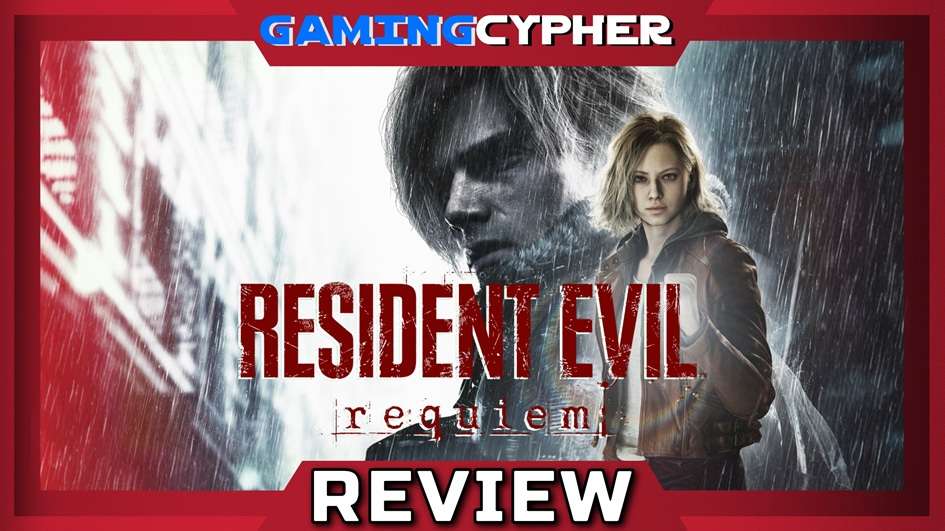
Set around three decades after the destruction of Raccoon City in “Resident Evil 3, ” Requiem introduces FBI intelligence analyst Grace Ashcroft as its primary new face. Grace is the daughter of Alyssa Ashcroft from Resident Evil Outbreak, and she’s a very different kind of protagonist than we’re used to. She isn’t a trained soldier or a hardened bioterrorism agent. She’s introverted, analytical, and far more comfortable with case files than firearms. That vulnerability defines her sections of the game, which lean heavily into the first-person survival horror style popularized in “Resident Evil VII: Biohazard” and continued in “Resident Evil Village.”
Grace’s investigation into a string of mysterious deaths leads her to the condemned Wrenwood Hotel, the same place her mother died years earlier. From there, the story spirals into kidnapping, experimentation, and a return to the broader conspiracy threads that have long defined the series. Her segments are tense, intimate, and often suffocating. Resources are scarce, ammunition is precious, and a relentless monster stalks her through tight corridors and decaying hallways. Much like Mr. X in “Resident Evil 2” or Lady Dimitrescu in Village, this pursuer forces you to think before you act. You can crouch, hide under tables, and even toss glass bottles to create distractions, but you’re never truly safe. The creature can track you in unnerving ways, even moving through walls and ceilings, which keeps the pressure dialed up at all times. Using a lighter to illuminate dark rooms is a clever mechanic that may also make exploration a little risky. Light helps you see, but it also makes you visible. That constant push and pull between awareness and exposure defines Grace’s campaign. While it’s an option, playing in first-person heightens every creak of the floorboards and every distant groan. The sound design in particular deserves praise; it transforms otherwise quiet spaces into nerve-shredding gauntlets.
Then there’s Leon S. Kennedy. Making his first major appearance since “Resident Evil 6” (if you don’t count the RE4 remake), Leon returns older, wearier, and still armed with a sharp tongue. Where Grace is fragile and methodical, Leon is assertive and aggressive. He has access to a broader arsenal, including firearms and a hatchet used for parrying, though its durability keeps you from abusing it. He can even pick up enemy weapons in the heat of combat, which can make for some funny improvisational moments in some encounters. What I love most about the dual-protagonist structure is how deliberate it feels. The game doesn’t just alternate perspectives for novelty’s sake. It understands pacing. After an extended stretch of creeping through claustrophobic hallways with Grace, stepping into Leon’s boots feels empowering. Conversely, after mowing through a pack of zombies with Leon, returning to Grace’s vulnerability restores that creeping dread. The rhythm between survival and power is thoughtful, and it kept me engaged from beginning to end. The ability to switch between first-person and third-person perspectives at any time is another welcome addition. While Grace defaults to first-person and Leon to third-person, the flexibility allows you to tailor the experience to your comfort level. It’s a smart evolution that acknowledges the divided preferences within the fanbase without compromising the game’s core identity. But if you want it scarier, play it in first-person.
Technically, Requiem is another showcase for Capcom’s RE Engine. Character models are detailed and expressive, lighting is moody and atmospheric, and environments feel dense with history. Raccoon City’s ruins, abandoned facilities, and medical centers carry a weight that’s both nostalgic and haunting. It’s easily one of the most polished entries in the franchise’s modern era, and that level of refinement is noticeable in everything from animation transitions to enemy behavior. If I have any criticisms, they’re relatively minor. The story takes a rather convoluted turn that may not resonate with everyone, and I would have loved to see additional modes included at launch. Considering how enjoyable Leon’s combat feels, a mode akin to The Mercenaries from Village would have been a fantastic bonus. Even so, the campaign length feels just right. It doesn’t overstay its welcome, and I finished it wanting more, not because it felt incomplete, but because I wasn’t ready to leave its world behind. That’s usually the sign of something special. What truly stands out is how confidently “Resident Evil Requiem” honors the franchise’s legacy while pushing forward. Grace represents a new generation shaped by the fallout of past horrors, while Leon embodies the scars of surviving them. Together, they form a cohesive vision that blends classic survival horror with high-intensity action in a way that feels natural rather than forced.
After decades of outbreaks, conspiracies, and bioweapons, it would have been easy for this series to feel tired. Instead, Requiem feels energized. It’s polished, atmospheric, mechanically satisfying, and unafraid to let you feel both powerless and unstoppable within the same story. For me, this is Resident Evil operating at full confidence, familiar in structure, yet bold in execution, and proof that even after all these years, the nightmare still has new ways to surprise us.
9/10
For more information, visit HERE
Related: Nick Navarro Reviews

Gaming since I was given an original Nintendo as a kid. I love great storytelling and unique ingenuity. When both collide in a single game, I'm a happy gamer. Twitter/IG @NickNavarro87






More Stories
SPORTIA Preview at GDC 2026
EDEN’S FRONTIER Preview at GDC 2026
GTA Online’s New Stoner Survival, Hunting Pack (Get Lamar) Map, 420-Themed Bonuses, and Much More to Celebrate 420