
TOTAL CHAOS Review for PlayStation 5 by Nick Navarro
The first thing “Total Chaos” does is make me feel unwelcome, and I mean that as a compliment. From the moment I washed up on the shores of Fort Oasis, it was clear this island didn’t want me there, didn’t care if I survived, and certainly wasn’t interested in explaining itself. Developed by Trigger Happy Interactive, the studio behind “Turbo Overkill,” this survival horror experience trades speed and excess for dread, scarcity, and a slow psychological squeeze that tightens with every step forward.
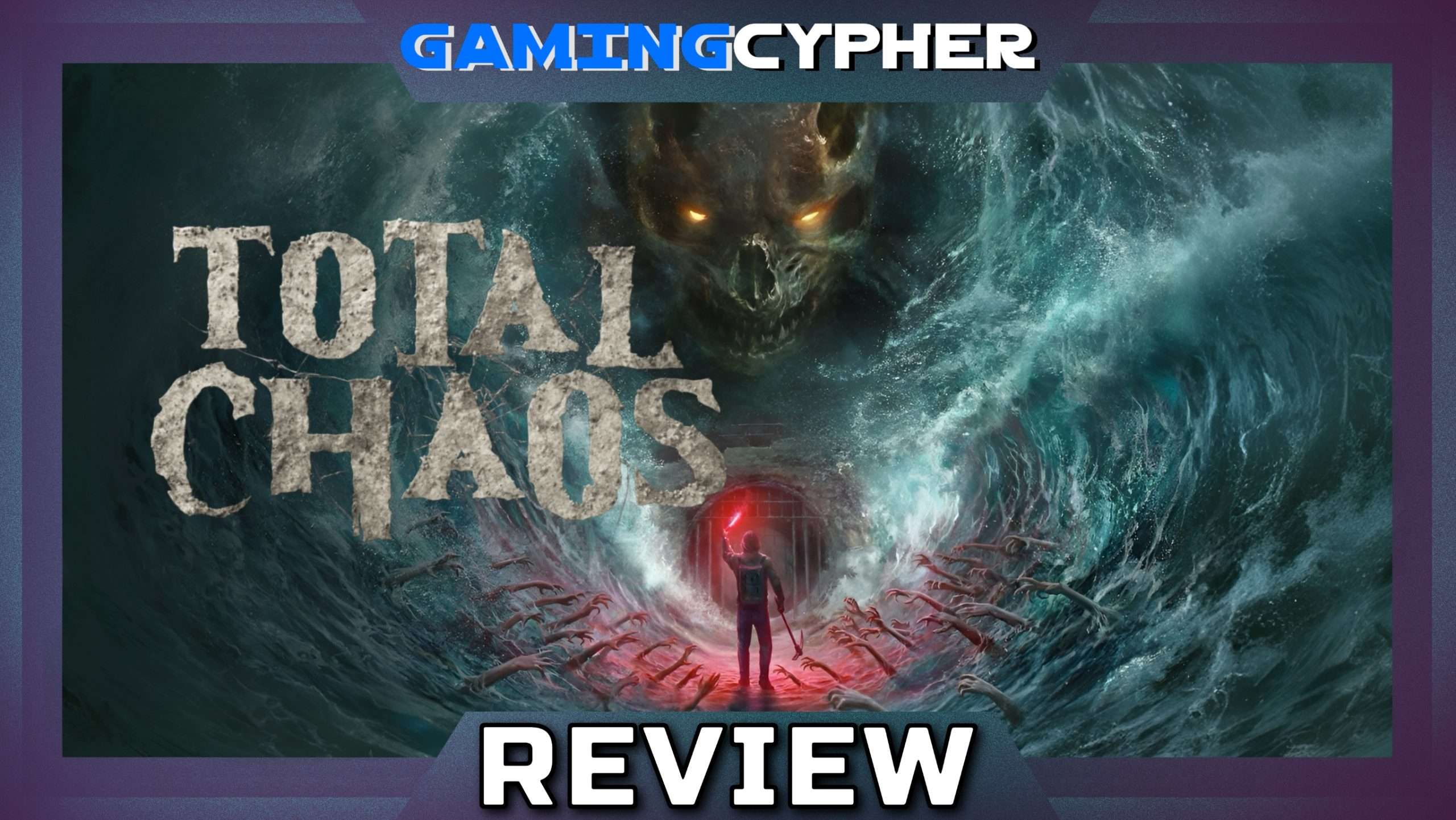
Fort Oasis itself is the star of the show. Once a thriving settlement, it now exists as a rotting husk of crumbling structures, flickering lights, and claustrophobic corridors that feel frozen in time. The island’s decay is immediately palpable, and “Total Chaos” leans heavily into environmental storytelling to sell its world. Notes, abandoned spaces, and unsettling visual details slowly sketch out a history that feels tragic and violent, even when the game refuses to spell anything out directly. I was constantly piecing together fragments of forgotten lives, and that act of discovery became just as important as staying alive. The premise is deceptively simple. After a storm leaves you stranded, a voice on a walkie-talkie urges you onward, offering guidance that feels reassuring at first. As I pushed deeper into the island, that sense of safety eroded. Reality becomes increasingly unstable, and the line between external threats and internal collapse starts to blur. “Total Chaos” plays with the idea that Fort Oasis may be as much a reflection of the protagonist’s fractured mind as it is a physical place, and the story thrives on that ambiguity.
Structurally, the game unfolds across nine chapters, each dragging you further into the island’s depths. Progression feels deliberate and oppressive rather than fast-paced, which works in the game’s favor. Exploration is tense and methodical, driven by limited resources and a constant fear of what might be waiting in the dark. This is not a power fantasy, and the game never lets you forget how fragile you are. Survival mechanics form the backbone of the experience. Scavenging is essential, and nearly everything I found had potential value. Items feed into a deep inventory system where space is limited and every decision matters. Do I carry crafting materials for later or prioritize healing items now? These choices create meaningful tension, especially when combined with the game’s enemy encounters. There are options to disable mechanics like hunger or weapon durability, but I played on standard settings and found the systems surprisingly generous without undermining the sense of danger.
Crafting is focused and practical. Weapons are makeshift and grimy, built from scavenged scraps rather than clean upgrades. Improving them feels earned, and there’s satisfaction in surviving long enough to make your tools more reliable. That said, combat is where “Total Chaos” shows its rougher edges. While the survival elements are strong, melee and gunplay against lesser enemies don’t always feel as impactful as I hoped. Some encounters can feel awkward or imprecise, and a bit of jank occasionally pulls attention away from what the game does best. Enemy design is a mixed bag. The more significant encounters are memorable, especially when the game takes its time building tension before unleashing something truly horrifying. The bigger scares land well, and the sound design does an incredible amount of heavy lifting here. Distant noises, distorted audio cues, and oppressive silence all work together to keep nerves frayed. However, repeated enemy types and behaviors can dull the impact over time, making certain stretches feel more repetitive than they should.
Where “Total Chaos” consistently shines is atmosphere. The game is disgusting, bloody, and exhausting in a way that feels intentional rather than gratuitous. Fort Oasis feels lived-in and cursed by its past, and the environments tell stories even when nothing is happening. I was almost always absorbed by the island’s visual identity and soundscape, even when combat stumbled. This is a game that understands how to make space itself feel hostile. There’s also a strange sympathy running through the experience. Despite its brutality, “Total Chaos” often feels introspective and cathartic. The descent into madness isn’t treated as a spectacle alone; it’s woven into the narrative and the world in ways that encourage reflection rather than shock for shock’s sake. Poor voice acting in places and uneven presentation do dampen the impact, but they never fully derail the experience.
Originally conceived as an award-winning total conversion mod, “Total Chaos” has been fully reimagined as a standalone release, and that legacy is evident. It can be orthodox to a fault, yet that stubbornness is also part of its identity. By the time the credits rolled, “Total Chaos” had left its mark. It’s rough, strange, and uncompromising, but it’s also focused, atmospheric, and deeply unsettling. If you’re willing to meet it on its own terms, it delivers a tense and memorable journey through a world that feels broken in all the right ways. Fort Oasis is waiting, decaying quietly, and daring you to see how far you’re willing to go to survive.
8/10
For more information, visit HERE
Related: Nick Navarro Reviews

Gaming since I was given an original Nintendo as a kid. I love great storytelling and unique ingenuity. When both collide in a single game, I'm a happy gamer. Twitter/IG @NickNavarro87



More Stories
GDC 2026: Tides of Annihilation Impressions
Space Warlord Baby Trading Simulator Review for Xbox Series S/X
SCREAMER Review for PlayStation 5