
Trash Goblin Full Release Review for Steam
🎮developed and published by Spilt Milk Studios Ltd.
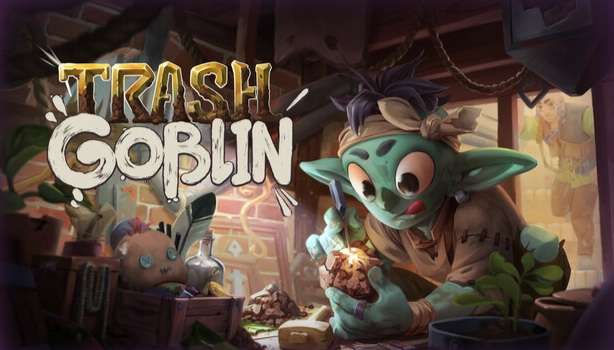
TL:DR Cozy capitalism meets Goblin-core. Repetitive in a good way, with a quirky personality, and perfect for players who love a slow, task-based loop without pressure. 9/10.
Trash Goblin is a cozy little goblin of a game designed for those of us who like to feel productive with zero stakes. I played the Trash Goblin demo back in July 2024 (you can read my first impressions here) and was genuinely delighted to get to review the full game now that it is available on Steam.
What was once a sparse but promising slice of goblin life has grown into a living, breathing trash ecosystem. The main story is now complete, which gives the game structure and momentum without losing its relaxed, open-ended pacing. There are a lot more characters. NPCs now show up with unique personalities, special orders, and tiny arcs that enrich the vibe of the game without forcing you to engage more than you want to.
The Glow-Up From Demo to Full Release
In the Demo, the basic elements of gameplay were in place, but the story, characters, and locations were only loosely sketched. I had originally gone digging in Spilt Milk’s Kickstarter to see their road map for development, and they had promised a fully loaded dumpster for goblins to dig through:
- Endless hours of gameplay, should you want it.
- 50+ Trinkets & Accessories to uncover, discover and study, with well over 1000 combinations and variations to realise!
- 9+ Tools and Contraptions to help you clean, upcycle, and sell items
- 40+ customers to serve, some with incredible stories to tell, others that just want to complete their coin collection, but all happy to haggle!
- 10+ hours to play through the story
- 4+ species of customers to serve, understand and interact with
- 2+ districts to sell in! Explore the city by changing the location of your shop as you progress through the game.
- 1 criminal empire to overthrow… when you decide to
- 0 pressure – no skill gates, just keep being your own Goblin for as long as you like!
Rather than do my same ol’ same ol’ boring “Story” “Gameplay” “Score” structure, let’s take this point by point:
- 10+ hours to play through the story – ✅ Check!
It took me almost exactly 10 hours to play through the main story, including side projects, market days, and upgrading my shop. The story in Trash Goblin is a small story, told with trinkets and to-do lists. This isn’t some epic goblin hero’s journey. You’re not saving the world. You’re running a cluttered little trash shop in the basement of your friend Aimon’s store. And honestly? That’s perfect.
- Endless hours of gameplay, should you want it. ✅ Technically true.
It took me 10 hours and exactly 100 in-game days to finish the main story, doing almost every side quest and unlocking most upgrades. After that, I played for about 30 more in-game days. While the game does continue, customers keep coming, and you can keep selling, the scripted interactions eventually run out. Once I unlocked the Selling Mat, which lets you display specific trinkets, the game loop became more passive. Customers almost always took what I displayed, and the need to fulfill special orders mostly vanished. So yes, it can go on forever… but the momentum slows once the core systems are complete.
- 50+ Trinkets & Accessories to uncover, discover and study, with well over 1000 combinations and variations to realise! ✅ Absolutely!
There’s a ton of variety in the types of trinkets you can uncover: jewelry, weapons, musical instruments, masks, etc. I loved both restoring items to their original state (putting a kettle lid back on a kettle) and creating ridiculous customizations. Masks, in particular, are super fun to experiment with.
- 9+ Tools and Contraptions to help you clean, upcycle, and sell items ✅ Yep!
Granted, the tools are all variations of the same sponge, chisel, and upcycler that players start with, but each upgrade works more efficiently. A higher-level sponge can clean a trinket in 3–5 swipes instead of 20. My favorite upgrade was the washing basin, which can clean up to three trinkets overnight, freeing up your daily time slots for chiseling or crafting. Especially once markets open up, this upgrade becomes essential.

- 40+ customers to serve, some with incredible stories to tell, others that just want to complete their coin collection, but all happy to haggle! ✅ Mostly yes.
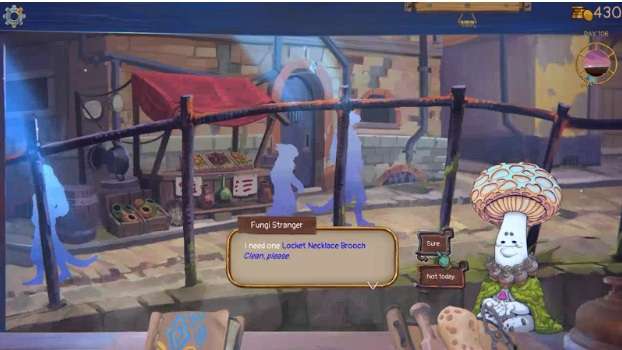
There are definitely 40+ customers, with a good mix of named characters (who return for special orders) and “Strangers” (who disappear if you don’t have what they want). I didn’t count exactly, but there are a lot. That said, the haggling system felt undercooked. Technically, you can haggle, but in practice, the only options I found were take the deal or don’t take the deal (at least the times I tried to use it). You can raise item value through cleaning and upcycling, but actual back-and-forth negotiation? Not really a thing.
- 4+ species of customers to serve, understand and interact with ✅ Checkity check check.
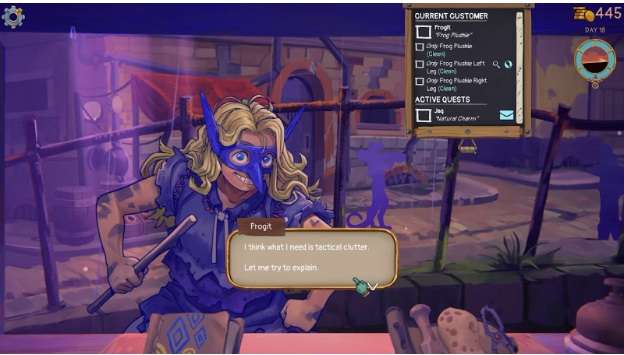
The game delivers a weird and wonderful melting pot of goblins, humans, mushroom folk, lizard people, sentient rocks, and a little girl who may or may not be a demon. It creates a city that feels diverse, lived-in, and full of personalities, perfect for the slightly chaotic charm the game leans into.
- 2+ districts to sell in! Explore the city by changing the location of your shop as you progress through the game. ✅ Technically yes, with an asterisk.
There are now exactly two marketplaces that goblins can visit to sell their wares, so the technicality comes with the + sign. I admit I was a little confused because, no spoilers, at some point in the story, goblins are told they can sell at any of the city’s markets, and they are given a map. The map looks like there should be five or six more locations to see, but nowhere besides the two unlocked during the main quest are available. Even though the game has been released to the world (to mostly positive reviews!), the map feels like a clue that the devs aren’t done with the game. I would expect an update or two in the next year to finish fleshing out the world.
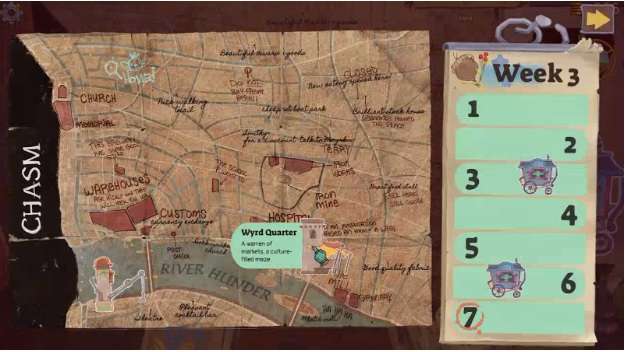
- 1 criminal empire to overthrow… when you decide to ❌ Uhhh… not exactly.
If a criminal empire is in the game, I didn’t take it down. Sure, there are criminal elements, several, actually, but they’re more charming and helpful than villainous.
- 0 pressure – no skill gates, just keep being your own Goblin for as long as you like! ✅ Sort of.
There’s no hard pressure, but if you’re the kind of player who hates being interrupted mid-task (hi, it’s me), this game can feel weirdly stressful. Every time I planned to spend the day chiseling and discovering new items, a crowd of customers would show up wanting clean, upcycled orders. You can always say no or ask them to come back later, but the disruption still pulls you out of your flow. That said, you can play at your own pace, choose which requests to accept, and there are no penalties for hoarding or refusing a sale. It’s cozy, even if it occasionally reminds me of my old retail job.
Story
So what is the story?
You play as Shubble, a goblin with an eye for shiny things, a sponge in one hand, and a chisel in the other. Your mentor and maybe-kind-of-sort-of-criminal friend Aimon has given you a tiny shop to run, deep beneath his far more “respectable” establishment. From there, you build your empire one trinket at a time, slowly transforming scraps into sellable curios. It’s not glamorous, but it’s yours.
Characters like Aimon and Auntie aren’t deeply developed in a literary sense, but they feel cozy, and it is sweet the way they both want to protect you, in their own odd ways. Aimon speaks in the kind of over-friendly vagueness that makes you wonder what else he’s got going on, while Auntie’s constant griping about cave licenses and bureaucratic nonsense is silly and sweet (until it costs 2000 gold for a Delving License! Then I agree with everything she says!)
The pacing is steady and unobtrusive. The game never rushes you, but the story moves forward just enough to keep your momentum going, nudging you into new systems as you build your way through each chapter. The narrative really aligns with the gameplay loop, clean, craft, sell, repeat, which is an appreciated integration.
Gameplay
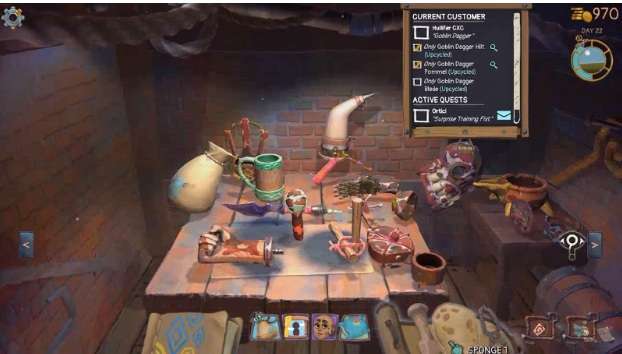
The gameplay is simple. Each in-game day gives goblins six time slots to get things done. Goblins will spend those chunks deciding whether to chisel open a new item from the “cruft,” sponge off the grime, fuse two objects together for a higher value, or prepare your best work for a market day sale. Each action takes a time slot, and when you’re out of time, your goblin goes to bed and starts fresh the next morning. Time pressure isn’t aggressive, but it exists, and when customers start flooding in with requests, that mellow goblin life starts to feel just a little like a part-time job.
The systems themselves are delightfully tactile, especially on the SteamDeck.
Chiseling is a mini-puzzle. Click or hold to chip away at blocks of various materials, some of which require hitting from specific angles. It’s not complicated, but there’s a rhythmic satisfaction to it.
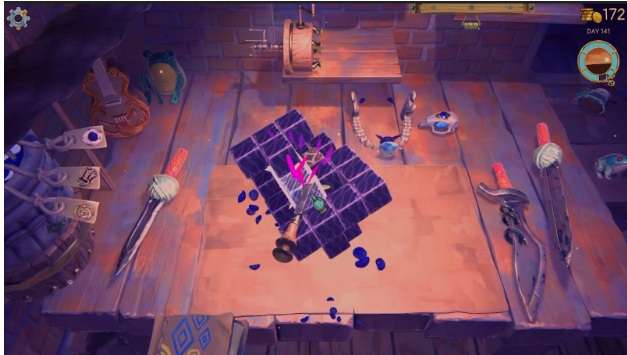
Sponging, meanwhile, is almost meditative. Rub away dirt and reveal the sparkling object beneath. No timers, no fail states, just the slow and slightly compulsive joy of cleaning.

Upcycling is where value gets added. Matching parts together, a frog head and a frog body, creates a full trinket worth far more than its broken-down pieces. Sometimes customers want something specific, like an unpolished antique. Other times, they’re vague: “I need a container,” or “I want something prosthetic.” These categories include everything from glass eyes to lampshades, and part of the fun is hoarding all your junk just in case something matches.

The customer system is low-stakes. They don’t leave if you make them wait. You can send them away, or call them back when you’re ready, and they’ll be perfectly pleasant about it. There’s no customer satisfaction meter, no angry outbursts, no one threatening to leave a bad Yelp review because you didn’t have a polished hairpin in stock.
Quality of life upgrades for equipment give the game a much-needed sense of progression. Early on, you’re working with basic tools one chisel, one sponge, and very little stash space. But as you earn money, you can invest in tool upgrades, shop expansions, decorative flourishes, and features like the wash basin, which lets you clean items passively overnight. Likewise, the Trinket Stash upgrade feels essential. Since only items in the stash can be sold at markets, increasing its size directly boosts your profit potential.
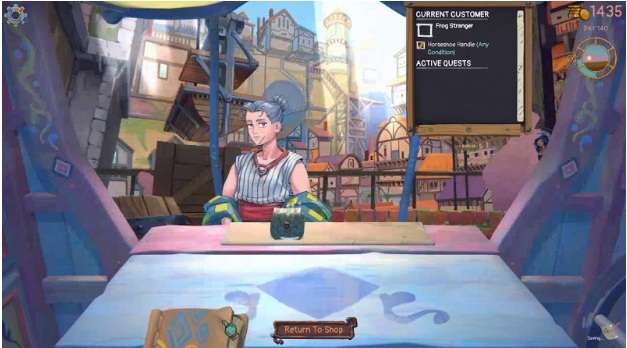
Speaking of markets, once unlocked, they become a key source of income. Load up your stash with your cleanest, most profitable junk, and head to town. A single good market day can net you enough gold to buy a major upgrade. It also helps you offload things customers just aren’t asking for. Unlike the Pay-What-You-Want Door (which I mostly used as a last resort for overflow), the market gives you real agency over your inventory and your bottom line.
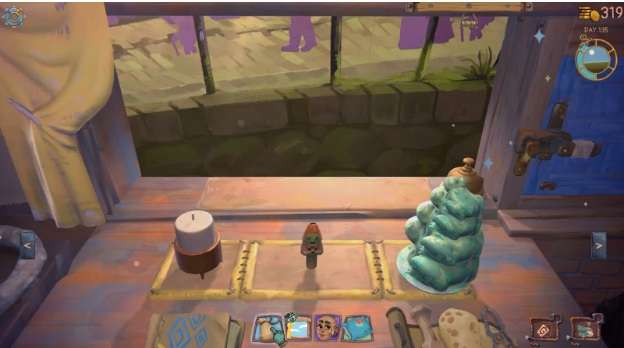
There are also neat touches like the Selling Mat, where you can place up to three handpicked items outside your shop to catch a random shopper’s eye. It’s low-pressure and surprisingly effective, especially when you’ve got a freshly polished magnifying glass you want to show off.
Overall 9/10
Trash Goblin is repetitive, but in the way knitting is repetitive. The loop is simple and satisfying, chisel, clean, upcycle, sell, and repeat. And yes, that loop repeats often. But for the right kind of player, that’s not a flaw, it’s the entire appeal.
Trash Goblin is available for PC via Steam.
Related: Reviews by Michelle Jones

Equal-opportunity gamer goblin.
Completionist role-player, lore-lover, stealth archer for life.
I review games by intent, audience, and design, not marketing or hype. I forgive ambition and value games that trust the player to think.
Big nerd. No apologies.





More Stories
SPORTIA Preview at GDC 2026
EDEN’S FRONTIER Preview at GDC 2026
GTA Online’s New Stoner Survival, Hunting Pack (Get Lamar) Map, 420-Themed Bonuses, and Much More to Celebrate 420