
Wuchang: Fallen Feathers Review
I walked into “Wuchang: Fallen Feathers” expecting another Soulslike checklist and walked away impressed by how much freedom and flavor it brought to familiar systems. Set in the late Ming dynasty, the game throws you into the plague-ravaged lands of Shu, where factions wage brutal war and the mysterious Feathering Disease transforms people into monstrous shells of themselves. It’s a setting steeped in myth and historical detail, and while the storytelling isn’t exactly sweeping, it lays a strong foundation for an experience driven more by atmosphere and action than exposition.
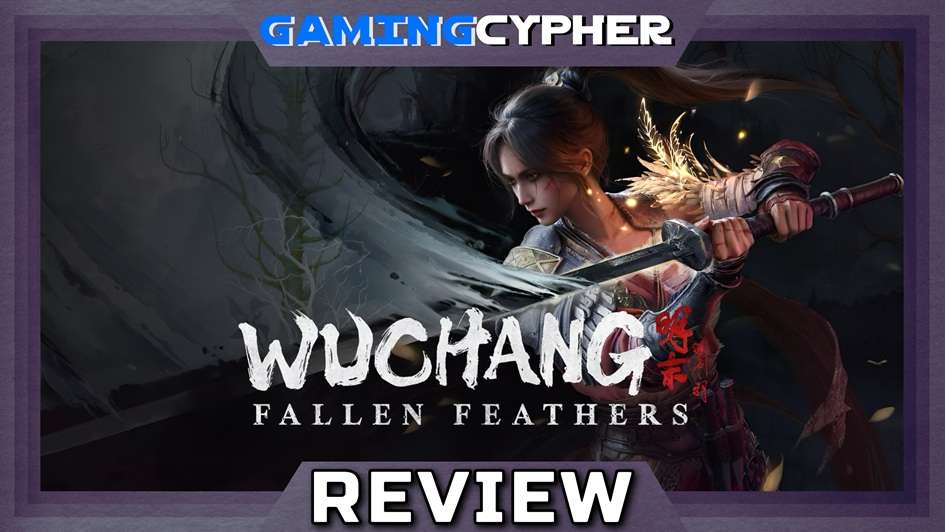
You play as Bai Wuchang, a pirate with no memory and a slow descent into madness. It’s a familiar setup in spirit, but what kept me engaged was how well the game blended genre expectations with ideas I hadn’t seen done quite this way before. Right from the start, the combat felt fast and fluid, with an aggressive tempo that rewarded risk over patience. Wuchang begins her journey with Cloudfrost’s Edge, a sleek longsword modeled after the Chinese changdao, but that’s just the beginning of what ends up being a deeply customizable toolkit. Weapons come in five distinct types: longswords, one-handed swords, dual blades, axes, and spears. Each class has its own discipline skills, and you can carry a primary and secondary weapon to swap on the fly mid-fight. It’s an elegant system that encourages experimentation. I built Wuchang into a quick, dodge-heavy dual-blade specialist, then later switched to a bruising axe-and-spell hybrid just to see how it felt. The best part? The Impetus Repository leveling system let me reallocate my build at no cost, which meant I could play with different approaches without the usual Soulslike penalty of regret.
Combat hinges on two major mechanics, Skyborn Might and Inner Madness. Skyborn Might is earned through shimmer dodges (Wuchang’s version of a perfectly timed dodge) and certain weapon-specific actions. You can then spend it on unique weapon and discipline skills, and integrating it into your flow felt seamless. I found myself actively chasing that shimmer rhythm in order to power up my arsenal, which added a welcome layer of push-and-pull to every encounter. Madness, on the other hand, was more of a mixed bag. Killing humanoids or dying increases your Madness level, while killing feathered enemies brings it down. It’s a clever concept, tying character condition to lore, but in practice it made me feel unusually fragile, especially during long stretches without a way to rebalance. It didn’t ruin the experience, but I definitely noticed the frustration creeping in whenever Madness tipped too far.
Outside of combat, Wuchang’s world is built with a clear respect for interconnected design. Each area loops back into itself smartly, with hidden shrines acting as checkpoints and shortcuts. The overall level design in this game is legitimately impressive and what stuck with me the most. Shu Sanctum serves as your main hub, a grounded and ritualistic space that anchors the more abstract, corrupted regions you’ll explore. The game doesn’t hold your hand when it comes to navigation, and while I got lost more than once, it always felt intentional, like the game was nudging me toward discovery rather than wasting my time. Armor and outfits add a bit more flavor. They grant stat bonuses, but you can freely transmogrify appearances, so I never had to sacrifice style for strength. The designs are gorgeous, inspired by Ming Dynasty tradition, and tailored to each region’s backstory. According to the devs, every armor set reflects the origin of its discovery, whether it came from a forgotten temple, a deranged cult, or a cursed battlefield. That kind of care shows.
Narrative choice also plays a role, though it’s mostly subtle. NPCs you encounter may offer side quests or shift the story in small ways, and your decisions can alter the game’s ending. It’s not wildly reactive, but there’s enough branching content to make the world feel alive. And with New Game Plus included, there’s reason to dive back in if you’re curious to see what could’ve gone differently. Boss fights, meanwhile, are solid but don’t often break the mold. Most deliver the tension and spectacle I expect from the genre, but only a few genuinely surprised me. Still, the moment-to-moment combat was so tight, and the buildup to each boss so engaging, that I rarely came away disappointed. Even the more frustrating areas felt worthwhile thanks to the mechanical depth and ever-shifting builds I could experiment with.
“Wuchang: Fallen Feathers” doesn’t reinvent Soulslike design, and honestly, it doesn’t need to. What it does is offer a fast-paced, flexible combat experience with just enough mechanical and thematic originality to stand out in a crowded field. I know I’m repeating myself, but again, the level design may be one of the best in the genre in quite a long time. It’s not a game-changer, but it’s consistently engaging, occasionally surprising, and refreshingly unafraid to try new things, even when not every idea lands. In a genre overflowing with grim worlds and punishing fights, Wuchang makes its mark by giving me room to play the way I want. And sometimes, that’s all it takes to turn cautious intrigue into genuine respect.
8/10
For more information, visit HERE
Related: Nick Navarro Reviews

Gaming since I was given an original Nintendo as a kid. I love great storytelling and unique ingenuity. When both collide in a single game, I'm a happy gamer. Twitter/IG @NickNavarro87



More Stories
Darwin’s Paradox! Review for PlayStation 5
GDC 2026: Ballgame Impressions for Steam
GTA Online’s Neighborhood Watch Event is Back Plus New Law Enforcement Vehicles, Time-Limited Outfits, and Much More