
“D-topia” Review by Nick Navarro
Not every game needs to bombard players with explosions, constant action, or endless objectives to leave a lasting impression. Sometimes the most memorable experiences come from slowing down, taking a breath, and asking questions that don’t always have easy answers. “D-topia” embraces that philosophy from beginning to end, delivering a thoughtful puzzle adventure that quietly explores artificial intelligence, human emotion, and the meaning of happiness without ever feeling preachy or overwhelming.
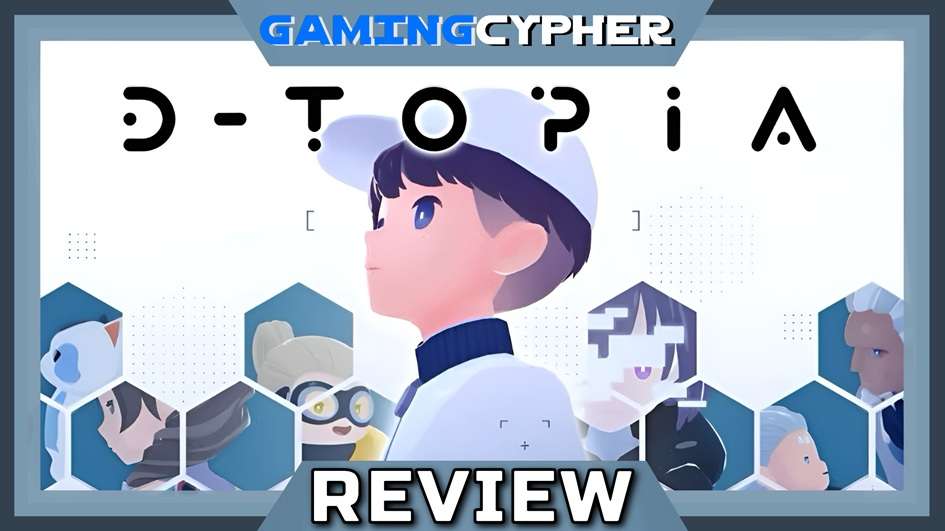
Developed by Marumittu Games and published by Annapurna Interactive, “D-topia” immediately feels at home alongside many of Annapurna’s narrative-driven releases. It blends relaxing exploration with clever logic puzzles while presenting a surprisingly philosophical story beneath its colorful presentation. What begins as a simple job fixing mechanical issues gradually evolves into something much larger, encouraging you to think about control, free will, and whether a perfectly curated life is really the ideal future. You play as the newest Facilitator assigned to D-topia, a residential community created as part of the Utopia Project. In this place artificial intelligence oversees nearly every aspect of daily life, carefully maintaining an environment designed to maximize happiness and eliminate discomfort. Your responsibility is straightforward on paper: solve problems, repair systems, and ensure the residents continue living their peaceful lives. Naturally, it doesn’t take long before you discover that not every problem can be solved with a wrench or a puzzle.
One of the aspects I appreciated most was how naturally the game introduces its central themes. Rather than delivering lengthy lectures about artificial intelligence or society, the narrative lets conversations with residents and environmental storytelling do the heavy lifting. Every character has their own concerns, personalities, and emotional struggles, making D-topia feel inhabited by people rather than simply NPCs waiting to hand out objectives. As I spent more time helping them, I became invested in their lives and curious about how my choices would affect both individual relationships and the larger community. That sense of choice plays an important role throughout the adventure. Decisions influence both the residents and the direction of D-topia itself, creating moments where there isn’t always a clearly right or wrong answer. The game frequently asks players to weigh comfort against truth, stability against freedom, and safety against individuality. While some decisions may feel more impactful than others, I still appreciated how they reinforced the game’s larger themes and encouraged me to think beyond simply reaching the next objective.
Exploration remains intentionally relaxed throughout the experience. This isn’t a game interested in creating tension through time limits or demanding combat encounters. Instead, you’re encouraged to observe your surroundings, interact with residents, and uncover details about this carefully constructed society at your own pace. That slower rhythm fits perfectly with the story, which allows each revelation to sink in instead of rushing me toward the next dramatic moment. The puzzle design complements that pacing remarkably well. Most of the challenges revolve around logical thinking rather than fast reflexes, making each solution feel satisfying without becoming frustrating. They also feel integrated into your role as a Facilitator instead of existing solely as obstacles between story beats. Repairing systems, restoring functionality, and resolving issues all contribute to the feeling that you’re actively maintaining this futuristic community rather than simply completing disconnected brainteasers.
I also enjoyed how the game gradually expands beyond the polished public face of D-topia. Being able to move between the pristine residential areas and the hidden “Block Side” creates an effective contrast that strengthens the narrative. The clean, carefully managed version of society begins to reveal imperfections hiding beneath its surface, and exploring these concealed areas becomes just as rewarding as solving the puzzles themselves. It’s an effective reminder that even the most carefully engineered paradise often comes with hidden costs. Visually, “D-topia” embraces a bright, welcoming aesthetic that reinforces the comforting atmosphere while quietly hinting that everything may not be exactly as it appears. The colorful environments help maintain the relaxing tone, even as the story explores increasingly complex ideas. Combined with its gentle pacing, the presentation creates an experience that’s easy to settle into after a long day.
I kept thinking how approachable this game remains despite its ambitious subject matter. Artificial intelligence has become a common topic in science fiction and a bit of a hot topic in our current real world, but “D-topia” chooses to focus less on technology itself and more on the people living alongside it. The story isn’t interested in presenting simple answers about whether AI is inherently good or bad. Instead, it explores how comfort, purpose, and personal growth can become intertwined when an intelligent system begins making decisions on humanity’s behalf. That balance between accessibility and deeper philosophical discussion gives the game much of its charm. I think if you’re looking for a relaxing puzzle adventure, you can enjoy the satisfying gameplay loop without overanalyzing every conversation, and if you enjoy dissecting science fiction themes, well, there’s plenty to think about, perhaps even still after the credits roll.
The experience isn’t entirely without minor imperfections. A handful of puzzle interactions can occasionally feel less intuitive than intended, and some story choices may not produce outcomes as dramatically different as you might want/expect. Neither issue significantly detracts from the overall journey, but they do prevent certain moments from reaching their full potential. By the time I reached the ending, I found myself reflecting less on the puzzles I’d solved and more on the questions the game had quietly planted throughout the adventure. That’s ultimately where “D-topia” succeeds. It isn’t trying to overwhelm you with complexity or challenge them with punishing difficulty. Instead, it offers a peaceful, thoughtful experience that invites reflection while delivering satisfying puzzles and memorable characters along the way.
“D-topia” proves that smaller adventures can still leave a meaningful impression. Its combination of accessible puzzle-solving, engaging world-building, and thought-provoking themes makes it an easy recommendation for gamers who enjoy slower, narrative-focused experiences.
8/10
For more information, visit HERE
Related: Nick Navarro Reviews

Gaming since I was given an original Nintendo as a kid. I love great storytelling and unique ingenuity. When both collide in a single game, I'm a happy gamer. Twitter/IG @NickNavarro87





More Stories
The Kortz Center Heist Now Available for GTA Online
EA SPORTS College Football 27 Review for PlayStation 5
Deathbulge: Battle of the Bands Review for Xbox Series S