
“Planet of Lana II: Children of the Leaf” Review by Nick Navarro
Quiet, atmospheric puzzle adventures are rare enough that when one resonates, it tends to linger in memory. That was certainly the case when I first played “Planet of Lana” a couple of years ago on PlayStation (you can check out my review of that HERE). Its striking art style, thoughtful puzzles, and the gentle companionship between Lana and Mui made it feel like a small but meaningful journey. With “Planet of Lana II: Children of the Leaf,” developer Wishfully returns to that world with a sequel that feels both familiar and noticeably more ambitious.
Set two years after the events of the original adventure, the sequel reunites you with Lana and her loyal companion Mui as they continue exploring their home planet of Novo. This time around, Lana has grown into a more capable and confident explorer. Her expanded abilities allow her to move through the environment with greater freedom, introducing mechanics like wall jumping, sliding, and dashing that make traversal feel smoother and more dynamic. These additions don’t drastically change the core formula, but they give the journey a sense of evolution that feels appropriate for a returning character who has already endured so much. Like its predecessor, this is a 2.5D side-scrolling puzzle-platformer built around cooperation between its two main characters. Lana and Mui each bring unique abilities to the table, and solving the game’s environmental challenges depends on understanding how those strengths complement one another. Mui, the small cat-like creature that accompanies Lana throughout the journey, once again plays an essential role in overcoming obstacles. This time, Mui’s abilities are expanded with powers that allow it to hack certain machines and briefly control other creatures in the world through telepathic influence.
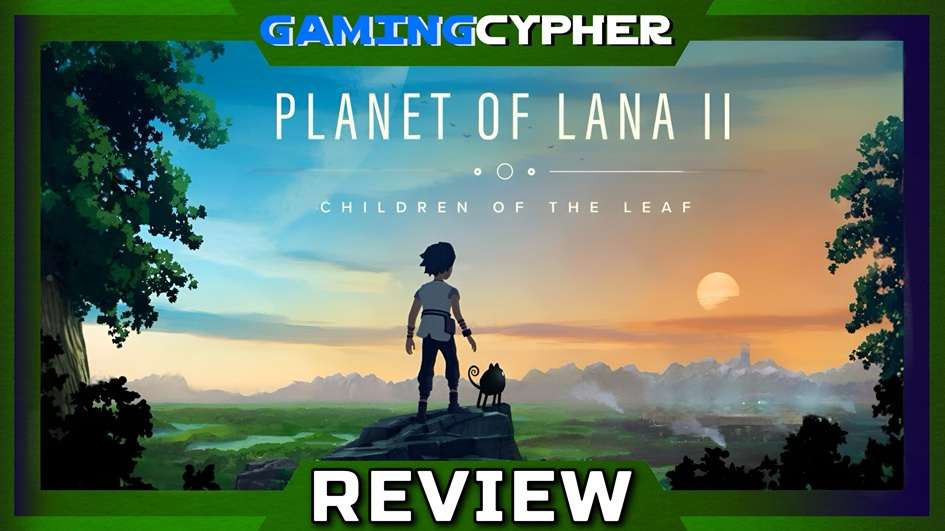
The puzzles themselves remain approachable but satisfying. Rather than focusing on overly complex logic problems, the game emphasizes observation, timing, and coordination. Many challenges feel organically woven into the environment, encouraging players to read the space around them and figure out how to manipulate its elements using both characters. This design philosophy keeps the pacing smooth and ensures that solving puzzles rarely feels like hitting a frustrating wall. Instead, most solutions emerge naturally through experimentation and awareness. One of the most distinctive aspects of the series continues to be its storytelling approach. “Planet of Lana II: Children of the Leaf” once again tells its narrative without spoken dialogue, relying on visuals, music, and an alien language to communicate emotion and meaning. The result is a story that unfolds quietly but effectively, allowing players to interpret the world and its characters through atmosphere rather than exposition. It’s a technique that gives the game a cinematic quality, where every moment, from peaceful exploration to tense encounters, feels carefully staged.
Visually, the game continues the tradition of presenting its world through beautifully hand-painted environments. From frozen mountain peaks to underwater spaces and ancient ruins, each location feels thoughtfully crafted and visually distinct. The blend of natural landscapes and encroaching technology helps reinforce the central themes of progress and imbalance that run throughout the narrative. Even when simply moving through these environments, there’s a sense that the world itself is telling part of the story. Exploration also benefits from Lana’s expanded movement abilities. Being able to traverse environments more fluidly adds a welcome sense of momentum to the adventure, especially when moving between puzzle sequences. While the gameplay remains rooted in careful platforming and problem solving, the added agility helps make the overall journey feel more dynamic than before.
Another standout element is the musical score. The orchestral soundtrack consistently elevates the experience, giving emotional weight to quiet moments of reflection and adding intensity during more dramatic sequences. There were several points during my playthrough where the music alone transformed a simple puzzle segment into something that felt surprisingly cinematic. It’s the kind of score that enhances the mood of the entire adventure and lingers in memory long after the credits roll. That said, the sequel isn’t entirely without flaws. While the expanded mechanics and deeper story are welcome additions, there are moments where the sense of discovery doesn’t feel quite as fresh as it did the first time around. A few minor technical annoyances also pop up occasionally, though none of them significantly disrupt the overall experience. These issues are small in the grand scheme of things, but they do stand out slightly in an otherwise polished presentation.
Even with those minor drawbacks, “Planet of Lana II: Children of the Leaf” succeeds in building upon the foundation laid by the original game. Wishfully has clearly taken the time to refine what worked before while introducing new mechanics and storytelling elements that give the sequel its own identity. The result is an adventure that feels thoughtful, emotionally resonant, and consistently engaging from beginning to end. For gamers who appreciated the quiet charm and puzzle-driven design of the first game, this sequel offers a richer and more expansive continuation of that journey. At roughly six or so hours in length, it delivers a focused experience that values atmosphere, companionship, and storytelling over unnecessary padding. By the time the adventure concludes, it leaves behind the same lingering sense of wonder that made the original so memorable.
“Planet of Lana II: Children of the Leaf” may follow a familiar path, but it walks that path with confidence and care. Through its striking visuals, meaningful character bond, and thoughtfully designed puzzles, it stands as a worthy continuation of a series that understands the power of quiet storytelling.
8.5/10
For more information, visit HERE
Related: Nick Navarro Reviews
Related:

Gaming since I was given an original Nintendo as a kid. I love great storytelling and unique ingenuity. When both collide in a single game, I'm a happy gamer. Twitter/IG @NickNavarro87


More Stories
MARVEL MaXimum Collection Review for PlayStation 5
GDC 2026: Tides of Annihilation Impressions
Space Warlord Baby Trading Simulator Review for Xbox Series S/X