
“WILL: Follow The Light” Review by Nick Navarro
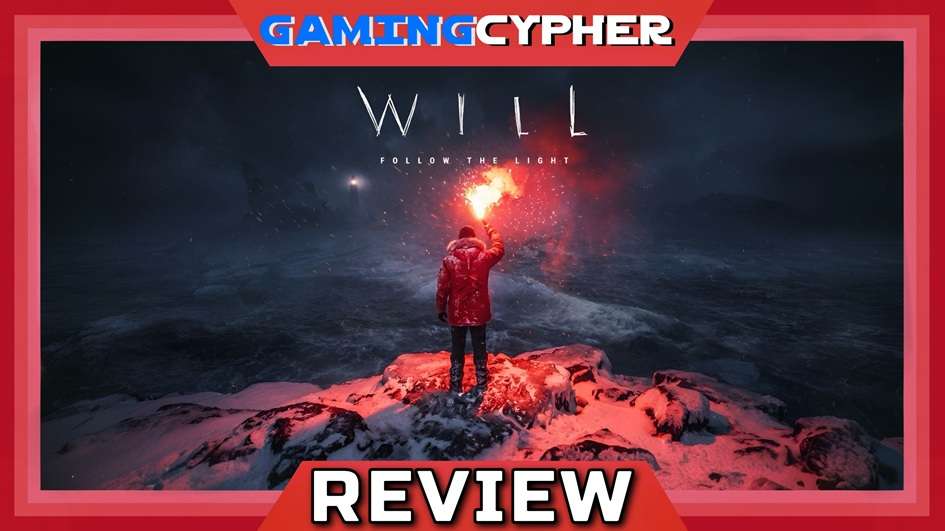
Grief, isolation, and memory sit at the heart of “WILL: Follow The Light,” shaping every mile of its northern voyage. Set against the harsh northern seas, it places you in the boots of Will, a lighthouse keeper whose quiet, repetitive life is shattered by a radio message that sets him on a deeply personal adventure. From that moment on, the game is less about traditional objectives and more about drifting, physically and emotionally, through a world that feels vast, cold, and strangely intimate.
At its core, this is a first-person narrative adventure that leans heavily on exploration, light survival mechanics, and environmental storytelling. I spent much of my time aboard Will’s sailing yacht, Molly, navigating open water that often feels endless in a way that’s both calming and isolating. The act of sailing itself becomes part of the storytelling language. It’s slow, deliberate, and occasionally unforgiving, but that pace feels intentional. The game wants you to sit in that loneliness, to feel the distance between points of interest rather than simply fast traveling through them. What stood out most early on was how grounded everything feels. The lighthouse routines, the weight of the boat in the water, the shifting weather systems, all of it is clearly built to sell a sense of place. When the game shifts away from sailing into other traversal methods like dog sledding or on-foot exploration through ruined landscapes, it keeps that same grounded tone, even if those segments don’t always land with the same consistency. There’s ambition here, no question, and it shows in how varied the environments are despite the relatively compact scope.
The narrative is the real anchor. Will’s search for his missing son begins as a straightforward tragedy, but it quickly expands into something more fragmented and introspective. Questions about his wife, his father, and the truth of his own past begin to surface as he moves through abandoned islands, frozen mountains, and the remnants of what once was home. The story doesn’t always deliver its revelations cleanly, and at times it can feel like it’s
withholding too much without enough direction, but there’s a sincerity to its emotional core that keeps it compelling even when it stumbles. I found myself more invested in the themes than the actual plot structure. This is very much a game about grief, estrangement, and the uncomfortable process of confronting memories you might rather leave buried. It doesn’t always hit with precision, but when it does connect, it’s through small moments rather than big twists. The idea of a man trying to save his son while also slowly unravelling his own identity gives the whole journey a quiet emotional weight that lingers, even when the gameplay doesn’t always support it.
That said, the experience isn’t without friction. There are moments where “WILL: Follow The Light” feels uncertain about how much guidance it should give you as the player, and that leads to stretches where I wasn’t entirely sure what I was meant to be doing. Combined with some awkward control responses, particularly during more precise traversal or puzzle segments, those moments can break the otherwise steady immersion. Technical hiccups also appear here and there, enough to be noticeable even if they don’t completely derail the experience. The puzzle design is functional rather than memorable. It serves the pacing more than it challenges the mind in meaningful ways, acting as small gates between narrative beats rather than standout gameplay moments. In a game so heavily focused on atmosphere and storytelling, that’s not necessarily a flaw, but it does mean the interactivity sometimes fades into the background rather than enhancing the journey.
Visually, though, the game is striking. Built in Unreal Engine 5, the lighting and environmental detail do a lot of heavy lifting in selling the northern wilderness. Snow-covered expanses, storm-lashed waters, and desolate ruins all carry a quiet beauty that reinforces the game’s themes of isolation and reflection. It’s at its strongest when it simply lets you exist in those spaces without interruption, just taking in the scale of it all. The sound design and soundtrack deserve credit as well. The music leans into ambient, experimental textures that blend into the environment rather than sitting on top of it. It supports the tone without overwhelming it, and in a game like this, that restraint matters.
By the time I reached the end, I was left with a mixed but generally positive impression. “WILL: Follow The Light” is clearly a passion project, one that reaches for emotional depth and atmospheric immersion even when its mechanics don’t fully keep pace. There’s a compelling experience buried beneath the rough edges, one that occasionally loses focus, but still manages to deliver moments of genuine emotional weight. It’s not a perfectly polished voyage, and it doesn’t always know how to guide you through its own waters, but it does succeed in creating a journey that feels personal, somber, and often visually unforgettable. When it embraces its strengths, the loneliness of the sea, the quiet weight of memory, and the slow unraveling of Will’s story, it becomes something worth sticking with, even when the currents get rough.
7.5/10
For more information, visit HERE
Related: Nick Navarro Reviews

Gaming since I was given an original Nintendo as a kid. I love great storytelling and unique ingenuity. When both collide in a single game, I'm a happy gamer. Twitter/IG @NickNavarro87





More Stories
Battlestar Galactica: Scattered Hopes Review for Steam
GTA Online this Week Features Motor Madness with Racing Rewards and Bonuses, Discounted Supercars, Plus More
New Trailer for LEGO Batman: Legacy of the Dark Knight Deluxe Edition Reveals First Look at DC’s The Joker & Harley Quinn as Playable Characters, Plus More