
Causal Loop Review for Xbox Series X/S
Developed by Mirebound Interactive / Published by Headup
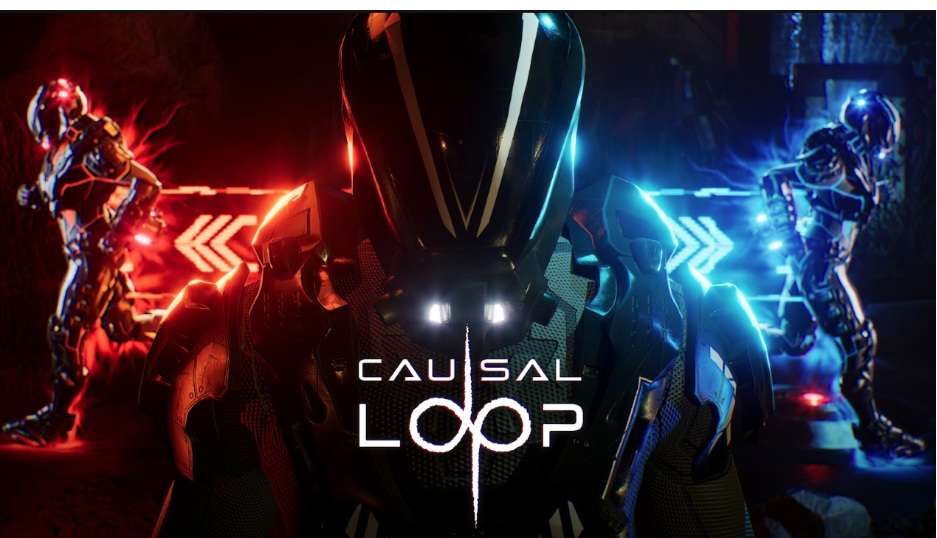
TLDR: Puzzle out how to get through the level, while puzzling out what it means for a civilization to die.
Causal Loop is a first-person sci-fi puzzle game that I can only describe as Portal and TeneT had a baby, a really fun baby.
I don’t mind making a direct comparison to Portal because the team at Mirebound Interactive has made one as well. In the first five minutes, players will meet Walter, a hovering mechanical sphere with a sharp tongue and strong opinions about everything you do (sound familiar?). But where Portal leaned into dark comedy and claustrophobic facility designs, Causal Loop has a different atmosphere (lol get it). The tone of the game lands closer to Nolan’s TeneT. It’s more serious, layered, and interested in the implications of what it is asking you to do. The humor is there, but it’s drier. The world is bigger, and the central mechanic isn’t a portal. It’s time.
Story
The main player character is Bale (well, one of many Bales), a sci-fi archaeologist who arrives on a dead planet with his partner Jen and their AI orb Walter to investigate a powerful signal emanating from ancient ruins. The civilization that once lived there discovered something they called the Root, which was an energy source that powered their world, but also eventually destroyed it. Continuing to dig for the Root polluted the water, poisoned the air, and destroyed the soil. By the time the inhabitants grasped that they had brought devastation to their world, it was too late (hmmmm….sounds familiar). A group of scientists and scholars devised a plan to intervene or even reverse the devastation. Because governments be governmenting, no single individual on the project knew the whole scope and scale. What we know now from the carved monuments and an entity called Nala’Tor is that the plan involved something called the Choronolith, a device, maybe a vehicle, but definitely something that rewrites Bale and Jen at a molecular level.
In the game, once Bale interacts with the Choronolith, everything changes.
Jen disappears, Walter migrates their AI consciousness from the orb to Bale’s suit to avoid disintegration, and Bale gains the ability to branch time.
Before discussing the story further, it’s worth pausing on the concept at the center of the game, causal loops.
A causal loop is when cause and effect are caught in a circle. In the game, this is clearly observable, Bale presses a button (cause), and a door opens for 3 seconds (effect). In a non-looping timeline, the door would close after three seconds, and Bale would need to press the button again to reopen it. In the causal loop of the game, though, there is always a Bale always pressing the button always opening the door.
The game Causal Loop not only utilizes this mechanic, its story explores the implications of it.
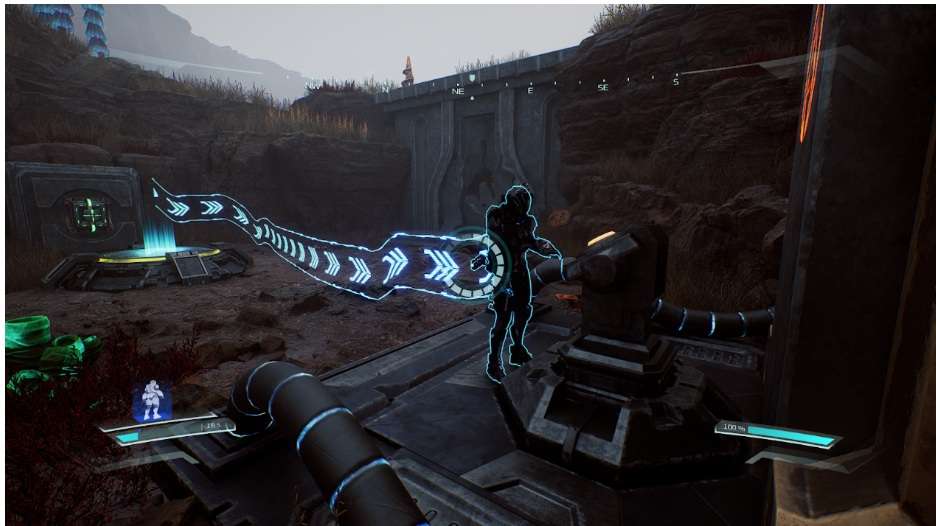
To navigate a level, players will need to rely on branching timelines to initiate cause and effect loops that Bale can use to cross bridges, run through doors, and activate machines all at the same time.
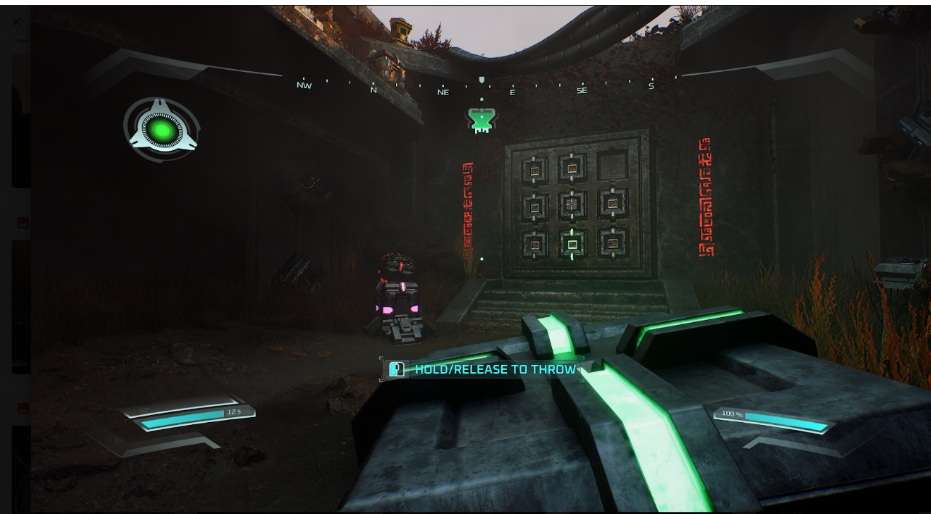
But what happens when one Bale pushes the button, and another Bale runs through? How many alternate Bales will be created? What would this mean if an entire world were caught in causal loops? What does it mean for your identity to encounter a dead version of yourself that didn’t complete the loop successfully? A hundred dead versions?
At a certain point, you’re going to meet yourself. But how long has that self been looping? An hour? As long as you’ve been playing? Or ten years? What would that do to your mind?
The story is parceled out at a great pace. There is enough happening at any given moment that players will be piecing together the plot while they are actively piecing together the level puzzles. The game never feels like it is withholding information for the sake of being mysterious. There are times when the player can figure out what’s going on before Bale does, which I appreciated because it means the story team wasn’t actually trying to TeneT us. They left enough breadcrumbs that an observant player can follow along and still feel a sense of pride for being clever enough to figure it out.
There was one part of the story that I felt was built on wobbly internal logic. There are as many Walters as there are Bales, and all of the Walters are feeding into a database that all other Walters can access. Essentially, Walter knows a lot, like a little floating YouTube tutorial video that could tell you how to navigate all of the puzzles. But he’s not going to tell you. The game insists that the only way to “fix” the past is to have Bale choose the path free of interference. From an internal logic perspective, I don’t think the game has done enough to explain why Bale has to be the one to decide to go through the yellow teleporter and Walter can’t just tell him, “Next, go through the yellow teleporter and turn left.” To be clear, I understand why the plot point is there for the actual game, players need to play! But I don’t think the story team did a strong enough job justifying why Walter can’t just spill the beans.
Then again, I’m only on Chapter 10. There are five more chapters to go, where they could wrap it all up with a beautiful bow. I’m choosing to give Mirebound Interactive the benefit of the doubt because so far, they’ve done everything else right.
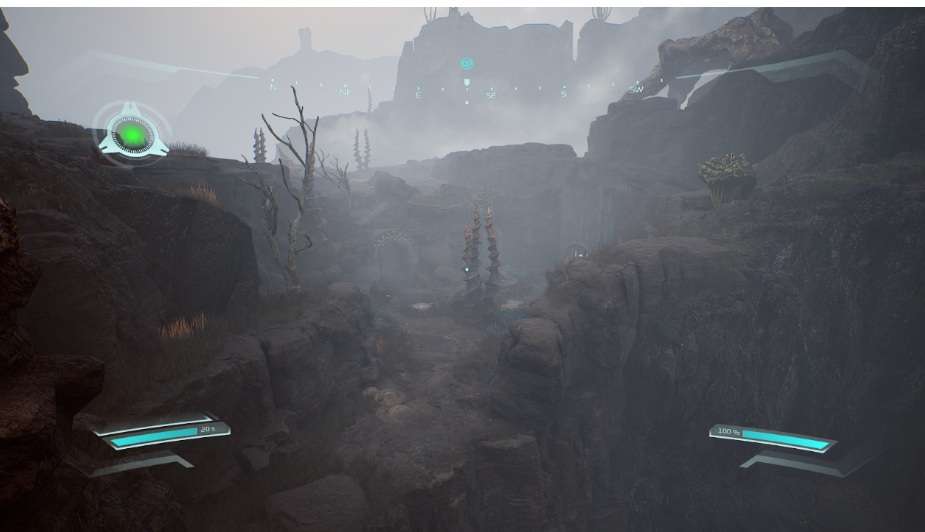
Such as the game’s world. The environment design really deserves recognition. The alien ruins have a quality that is hard to place. The geometry is familiar, but the designs are aliens. There’s something Gigeresque in some of the structures, that uncanny valley of almost but not quite human. Pyramidal forms appear throughout, but I felt that the game wasn’t leaning into pyramids as some ancient-alien theory shorthand, but rather as a recognition that the universe is math. The pyramid is one of the most structurally efficient shapes in nature, and, on Earth, it happens to appear independently across every inhabited continent with prehistoric civilizations. It was conceived of separately by cultures that had no contact with each other, so it is not strange to me that another intelligent species, on another world, but still bound by the same mathematics, would build the same shapes. The game felt like it understood this, and the result was that the ruins of the planet felt genuinely discovered, rather than art-directed.
The world is beautiful. Creatures that move like squids drift through the atmosphere, tentacles pulsing, entirely unbothered by the two humans picking through the wreckage of a civilization below them. Small arthropod things skitter across the surface, glowing fluorescent blue. The game never explains them and I don’t need it to. This was another example of the development team showing their science brains because, like pyramids, the crab or spider form is one of the most energy-efficient shapes that evolution (as it exists on earth) keeps independently arriving at.
All things eventually turn to crab. On earth and across the stars.
What the design gets the most right is the texture of absence. I realized after some time that I had only been exploring the planet’s industrial centers, mainly large stone complexes, machinery, and formal monuments. There are no houses, no suburbs, no markets, no visible evidence of how an ordinary member of this species might have spent an ordinary day. I don’t know if this was done intentionally or not, but from an archaeological point of view, it absolutely fits. We can only know a civilization by what it chose to make permanent through stone or steel. The game design lets players know that the Root was the most important thing in this society because that is what remains.
Gameplay
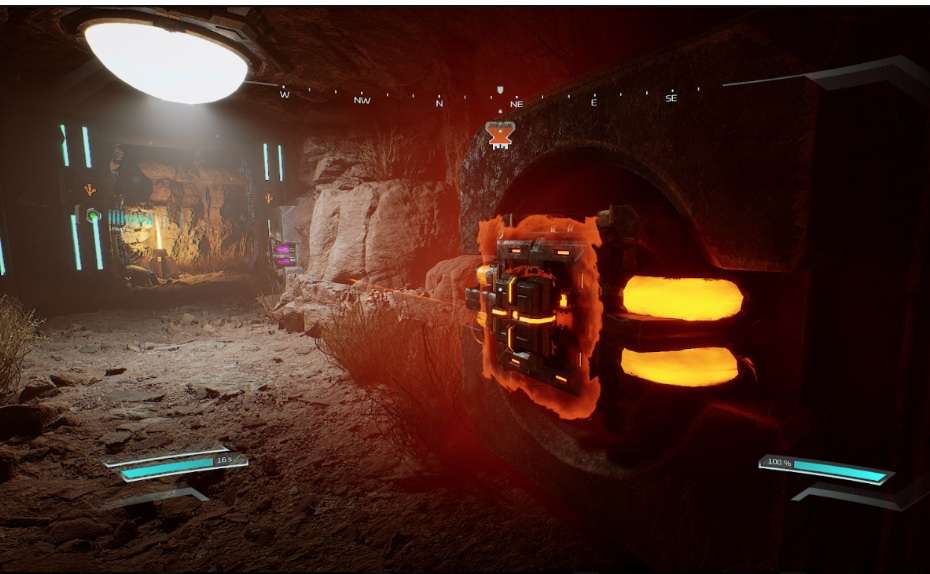
Causal Loop is pure puzzle game. There are no enemies in the traditional sense, no weapons, no health bar (not one that matters at least), because the puzzle is the game.
The core mechanic is leveraging causal loops through branching. Branching is Bale’s ability to create time-split iterations of himself. Over the course of the game, players will unlock three color-coded branches, blue, orange, and green. Each branch has a limited active window of roughly twelve to twenty-ish seconds, and must complete its assigned tasks within that window before the branch loops. The rules are precise and unforgiving. If not-branched Bale runs into an iteration, both explode. If two iterations cross paths, not just touching, just crossing over where another walked, they both explode. Players will need to be aware of every space they’ve moved through.
The puzzle toolkit expands as players advance. The game will layer on color-coded teleporters, force field gates that iterations can’t pass through, keys with countdown timers, and a numerical power charge system. The game adds these mechanics gradually, giving players enough time to understand and master the new system before the next arrives. Chapters one through six almost feel generous in how clearly they signal what needs to happen to solve the puzzle. But later chapters stop holding your hand. By chapter nine, players will be managing timing synchronization of multiple iterations executing different tasks at staggered intervals, watching countdown circles like they’re mission control at NASA, and distinguishing between extra time that means you’re done, and extra time that means you missed something.
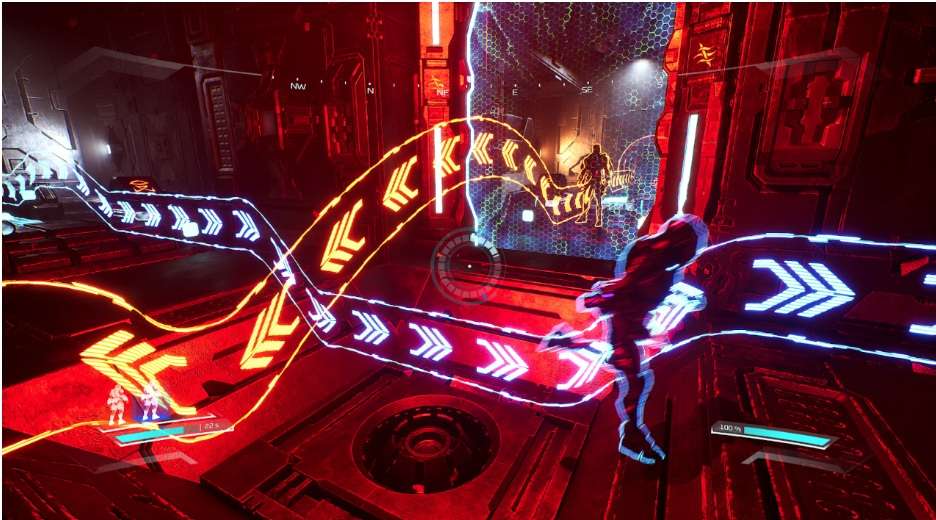
What the design gets consistently right is that failure is always instructive. I never encountered a softlock, a broken state where progress becomes impossible without restarting. In a puzzle game this mechanically intricate that deserves some major applause from players. The complexity of some of these puzzles makes it feel like locking a player out would have been easy to do accidentally, but in the final release, it never happens.
Something worth naming is how Causal Loop’s structure makes stopping hard. I started playing it during a week when, due to circumstances beyond my control, I didn’t have access to my ADHD medication. Typically, that makes task initiation pretty hard for me. But Causal Loop managed to override my own neural network by giving me an instant and constant dopamine hit, effectively addicting my executive dysfunctional brain to the game. What was supposed to be a thirty-minute “Let’s get past the tutorial” game session turned into a five-hour, “Why is it dark outside?” marathon.
Now I might have been in a position to more readily discern and appreciate this, but the game is engineered to make forward momentum feel like the only reasonable option. The puzzles are hard enough that success feels earned. The story parcels out mysteries at exactly the right intervals. The result is a game that doesn’t just hold your attention, it occupies it. Since putting the game down to write this, my brain has been running quiet background calculations about bridge puzzles, and what if I just try this instead of that. That, more than anything, is the sign of a 10 out of 10 game for me.
Overall
10/10
Mirebound Interactive created a game that works on three levels.
On the surface, it is a well-designed puzzle game that is intuitive to learn quickly and deep enough to sustain fifteen chapters of escalating complexity. Below that is a science fiction story with genuine ideas in it. The causal loop is not just decoration. It is a load-bearing mechanic that shapes characters and drives the plot. At its depths is something that I found quieter and harder to articulate. The extinction of a civilization at the center of this story feels like more than just a prop. It is a portrait of a species that, after its final failed attempt to save itself, turned to leaving a message for whoever came after.
All of this adds up to a game that is asking, underneath everything, what it means to try.
For a 15ish-hour video game, that’s pretty darn good. Well done, Mirebound.
For more information, visit HERE
Related: Town of Zoz Review for Steam

Equal-opportunity gamer goblin.
Completionist role-player, lore-lover, stealth archer for life.
I review games by intent, audience, and design, not marketing or hype. I forgive ambition and value games that trust the player to think.
Big nerd. No apologies.


More Stories
The Mound: Omen of Cthulhu Review for PlayStation 5
Denshattack! Review for PlayStation 5
Moss: The Forgotten Relic Review for PlayStation 5