
Town of Zoz Review for Steam
Developed by Studio Pixanoh I Published by Balor Games
 TL:DR: I’m sad.
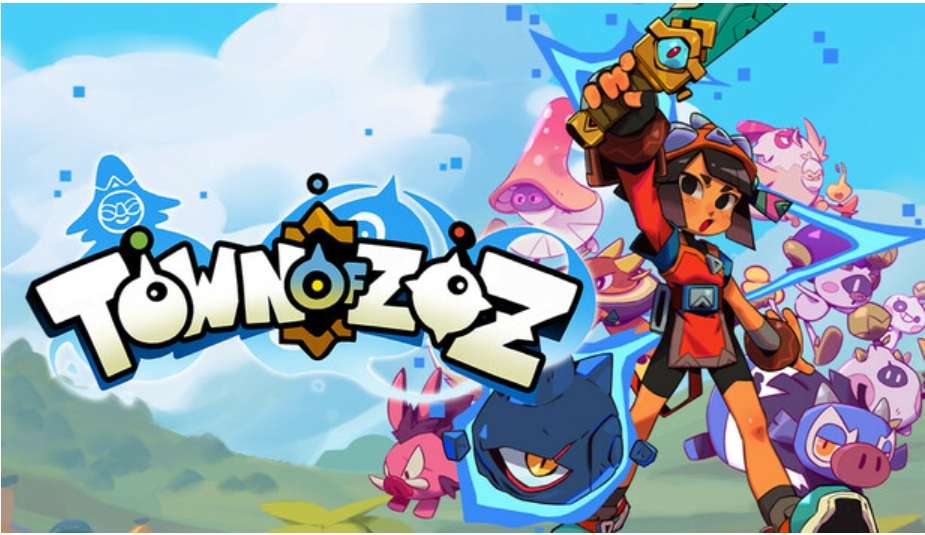
Town of Zoz, developed by Studio Pixanoh and published by Balor Games, is a narrative-driven action RPG that blends combat, cooking, farming, and exploration. You will play as Ito, a young shaman chef who returns to his hometown and uncovers a supernatural threat tied to his community’s past.
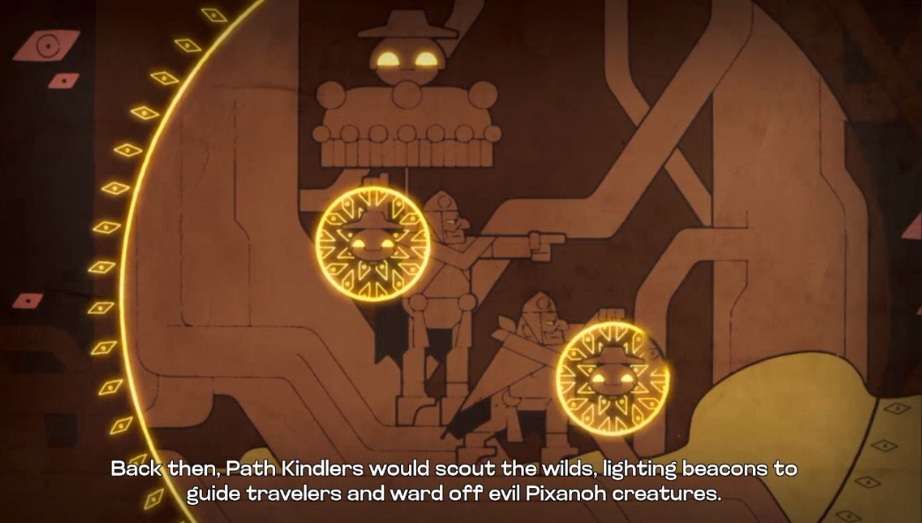
The game draws inspiration from 90s anime with a loving nod to the Rune Factory series, but also works hard to carve out its own identity, set in a modern fantasy world that is rooted in Latin American indigenous cultures.
Story
The story starts personal and expands into something larger. Ito is written as a flawed protagonist, with arrogance and impatience that are believable for a kid. His relationship with his parents is a central arc in the story, and growing up means coming to understand his parents’ choices and emotional complexity. The game also incorporates cultural layers that strengthen the world-building, such as Ito not being fluent in his native language, and the younger generation having to piece together their heritage and find their own ways to connect with it.
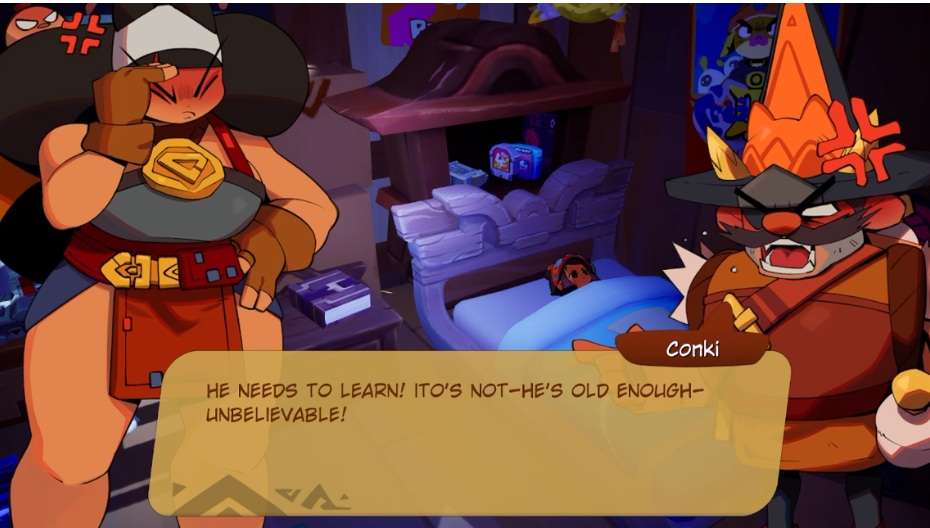
The story arrives slowly, taking two game chapters to open up, but once it does, it opens up. ToZ isn’t afraid to touch on darker themes and works to incorporate the cultural inspirations as more than just set dressing.
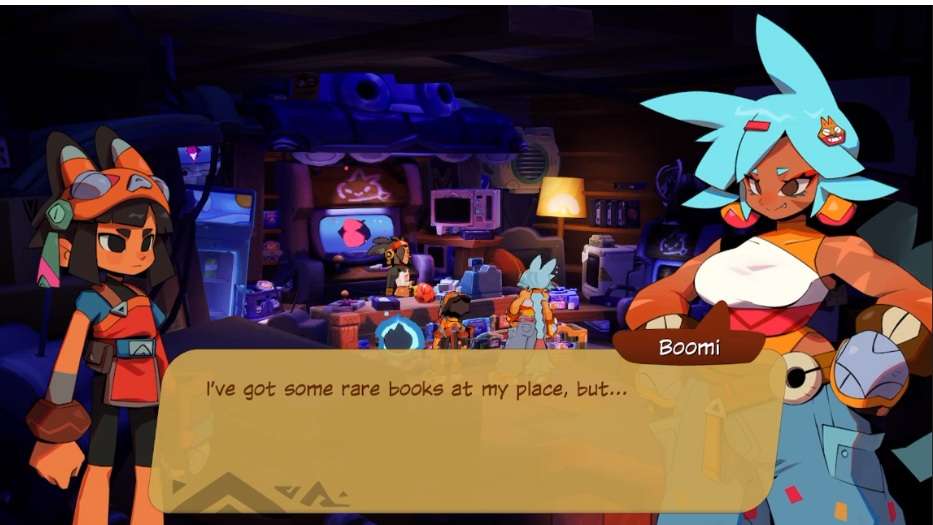
The game will give you about 13-20ish hours of gameplay, depending on how good a farmer you are, and if you’re going after all of the cooking achievements.
Gameplay
Gameplay consists of four main functions. There is cooking, farming, exploration, and combat.
Cooking et. al.
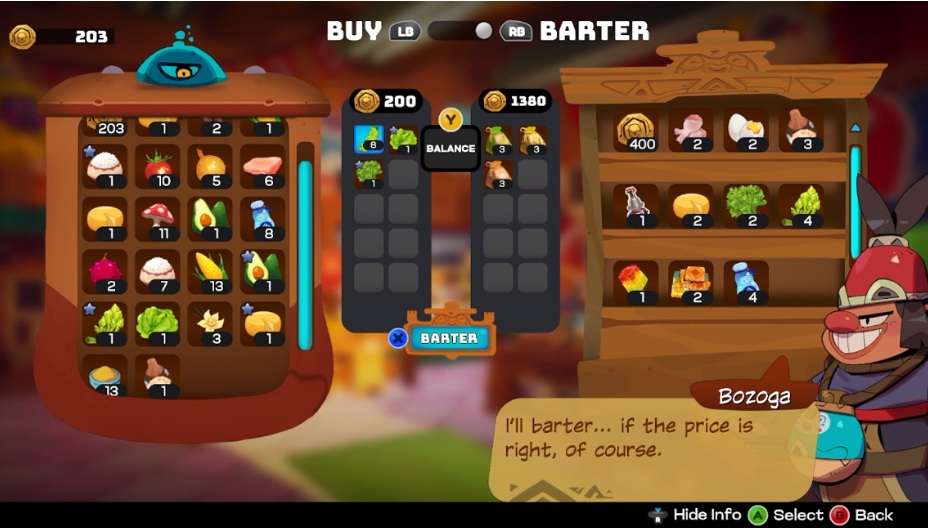
Cooking is the most fully developed system in the game. Meals are prepared from ingredients gathered through farming, fighting, or combat (seriously, the Avocad-Cat and Adobo Sprite things are fantastic). You won’t spend time grinding for level-ups, but for the ingredients of dishes that will be players’ primary stat buffs. The cooking system has all the elements for a properly obsessive mechanic, including ingredient quality levels, a timer, and a mini-game that all affect whether you get a basic Avocado Toastilla or a GOLD Avocado Toastilla! It’s no joke to say that the forums and I have been up in arms about the gold Toastillas.
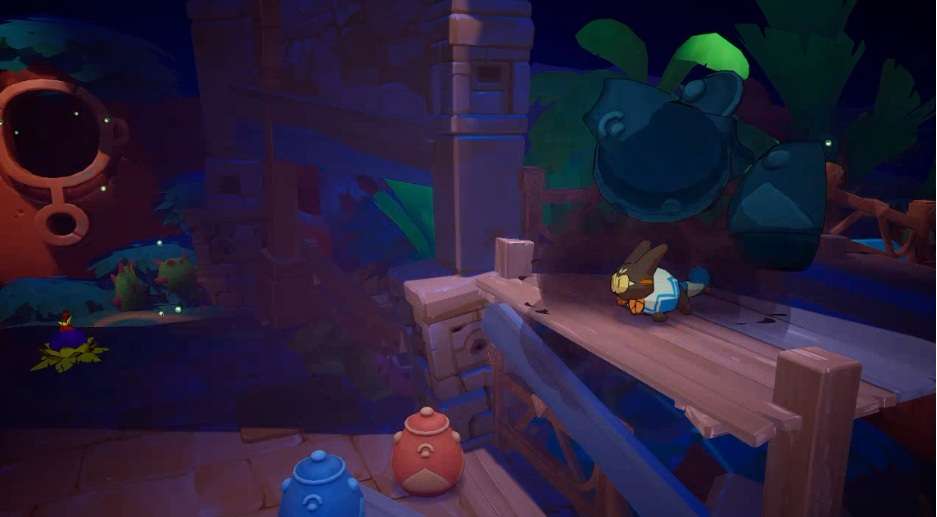
Farming, by contrast, is functional but thin. When I play Rune Factory, Story of Seasons, or any of the cozy farming staples, I always go all in on my farm. I’ll spend an extra 20+ hours just farming virtual carrots and loving every minute. I’m not sure what it was exactly, but something about the farming in Town of Zoz wasn’t quite hitting the same dopamine sweet spot as other games. Maybe it is because crops grow quickly, and there is minimal upkeep? This should be a positive, because less farming means more adventuring? Maybe it’s that farming doesn’t cause me to pass out from exhaustion if I do it too long? That should be a good thing, but I also noticed its absence. Maybe it’s that the farming loop goes so quickly that it leaves the whole system feeling supplemental, rather than as a core piece of the game, especially in the early chapters.
Exploration is pretty typical for this style of game, but the art takes it to another level. I’ve spent time in Middle America, and the game does a great job of capturing the claustrophobia of the wilderness. Plants have to be hacked through to move forward, and as players get more control over Zee, Ito’s spirit companion, they can open up more areas to explore. The Dungeons are genuinely beautiful, and I was excited to see where they would take me. Each dungeon has environmental puzzles that need to be navigated with Zee, who can possess objects to make them lighter.
Combat and Jumping
Whenever I have an issue with a game, I usually go on the hunt for information. 9 times out of 10, it’s a me problem, not a game problem.
Unfortunately, Town of Zoz is the 10th time.
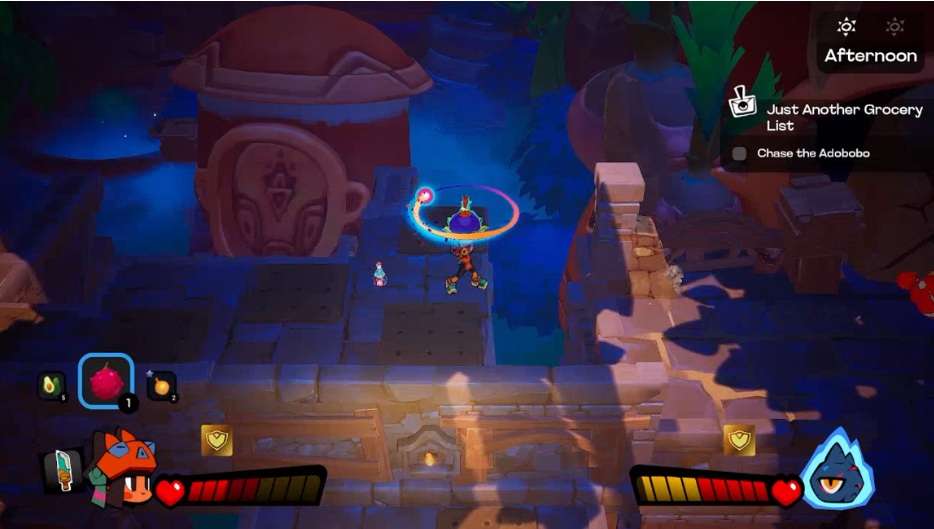
Across reviews and discussion boards, the game’s combat and jump systems were the most criticized.
The core gameplay loop involves Ito’s machete, a dodge roll, some sub-weapons tied to specific enemy types, and Zee, who supports in a variety of ways. There are a few boosts players can purchase at the clothing store, pins and cool shoes to increase speed and attacks, and Zee can unlock new attacks with the occasional enchanted game cartridge, but other than that, progression is minimal.
Early on, the pins and cartridges are plenty.
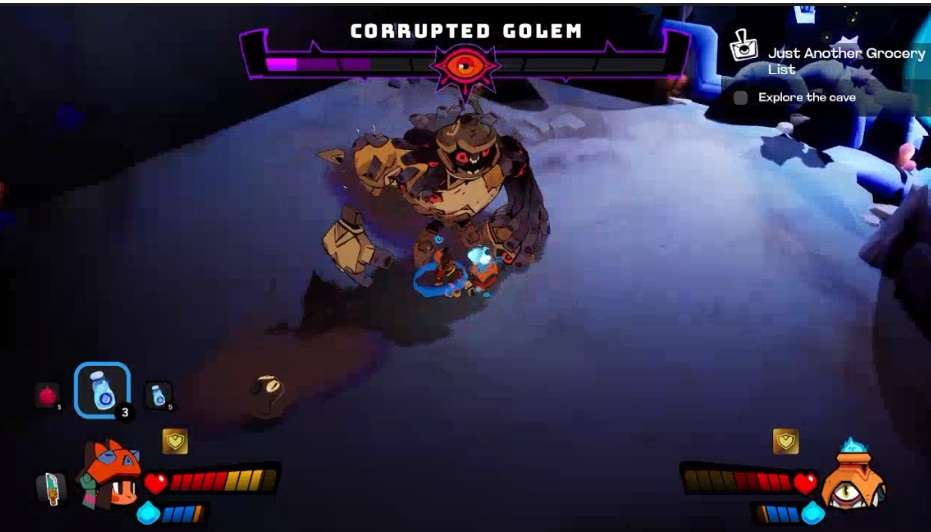
The problems start as enemies level, but Ito doesn’t (not meaningfully). Enemies become sponges for damage, and Ito has to start scarfing lettuce in the middle of a fight to keep going.
I cannot emphasize to you enough how much food I was eating during a fight. Minimum four thousand calories for a dungeon boss. This would be okayish if I just scarfed the food a la Skyrim (we’ve all swallowed forty apples to fight a lich). But every time you eat, there is an accompanying animation, which makes you unable to attack for about a second. Even if a player is technically invincible during the animation, this froze Ito enough where enemies could come up next to me, and the moment the animation ended, I would be pummeled, thus needing to eat more food.
I will admit that the mechanics did cause me to adapt my combat in ways I wasn’t expecting, which I always appreciate in a game, but this didn’t outweigh the larger frustrations I felt over Ito’s overall sluggishness in combat. It sometimes felt like they were running through mud when trying to maneuver.
Nothing in the game, though, caused me more frustration than the jumping mechanics. According to communications I could find, jumping should be automatic, or, according to other communications, players do need to push a button as they approach an edge. Or maybe it’s just when sprinting, or maybe holding the sprint button while also tapping the jump button. Or maybe sprint, then walk, then jump, then sprint is the combo.
And maybe it all depends on whether you’re playing keyboard, controller, or Steam Deck. At one point, I honestly felt like I had mastered jumping and that everyone was just complaining, but then I started playing on the Steam Deck, and it felt like nothing that I had done before was working anymore.
The point I’m trying to make, is that I was never 100% confident that I was actually going to jump when I was trying to.
I have 12 hours in Town of Zoz, and jumping caused me to quit mid-dungeon grind. Because if you die, you lose all your resources and have to replay an area, fine, I can deal, but when you die because your character wouldn’t make a jump 15 times in a row, and you lost all your life and ate all your food, well then you question your entire life up until that point.
It was at this moment that I realized I had been tolerating the combat, rather than enjoying it.
In this game, there are four functions, and unfortunately, three of those four are inconsistent and thin.
Technical State at Launch
With everything I just said, I will admit I was struggling to write this review. I do not like giving negative reviews, and even when I have a problem with a game, I can understand that it’s me, not the game.
When this happens, I turn to research. What am I missing? What were the developers’ intentions? What did they say?
And this is where I started to clarify my thoughts.
Because the answer to my questions is not much.
Maybe I’m spoiled because I’ve gotten to play so many Hooded Horse games in a row (see my review of Heart of the Machine 1.0 for my tangent about Hooded Horse Developers), but I have gotten used to devs being in communication about their projects.
The developers from Pixanoh Studios have been almost eerily silent about the game’s issues on Steam and elsewhere on the internet.
Town of Zoz launched on April 9, 2026, with two confirmed progression-blocking bugs, one in Chapter 3 and one in Chapter 5. Studio Pixanoh publicly acknowledged the problems on April 13, and on April 17, they offered a workaround for the Chapter 3 bug, but no patch, and added that there is no workaround for the Chapter 5 bug, but a patch would come soon.
It is May 6, 2026, as of the writing of this review.
April 17, 2026, is the last communication I can find that the developers released on Steam (I do want to acknowledge that they have been active-ish on Twitter, but I won’t touch that cesspool to see for myself. What I can say is that, as of May 3, in the discussion forums on Steam, a user mentioned in a post that they had tried to reach out to the devs through Twitter about a problem, and the dev team had responded, saying they would let the rest of the team know, but that was a while ago and so far, nothing has happened.)
Players are reporting frequent crashes, which I have also experienced at random times, usually associated with the loading screen. There is at least one bugged achievement and a softlock in a soul-collection quest.
Even more than that, as of writing this, the developer’s website still lists the game as a work in progress with “no release date.” How can players ever hope to have updates when the team is not even updating the website with their name in the url?
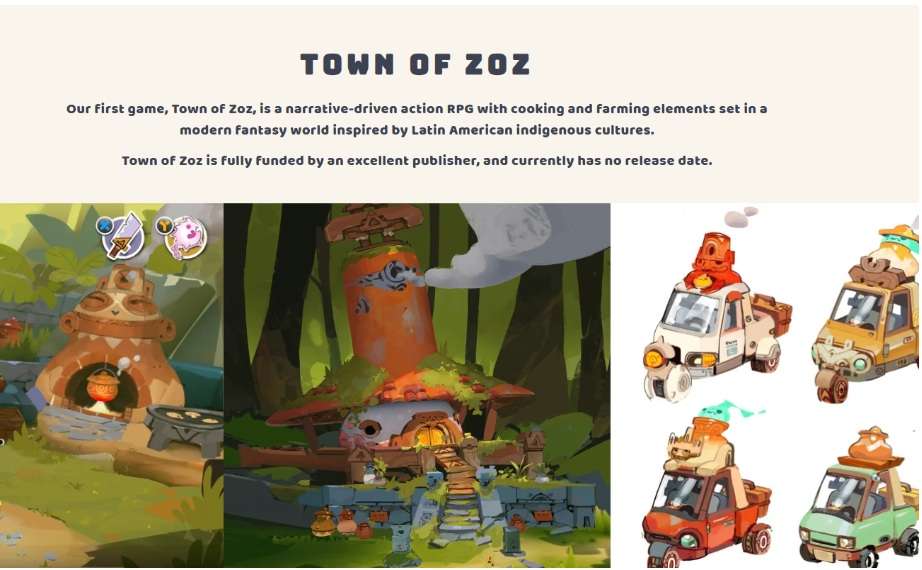
Ladies and Gentlemen, She’s, He’s They’s, They’res, I’m sad.
What do you do with a game that is so beautiful and was so lovingly crafted, but that is also partially broken?
Tangent: On Potential, Obligation, and the Question of “Enough”
There is a particular kind of frustration that potential can produce.
A game that is simply bad is easy to put down. Town of Zoz is not simply bad, and that is the problem.
When a game like this is released, it enters into a contract with the audience. Not a legal one. Something murkier. Players who spent fifteen hours with Ito and Zee and Boomi and all the rest, who pushed through to learn the secret of Xulnoch, did so because the game gave them reasons to. That time investment creates a kind of claim on the game. Not ownership, but a voice about what should happen next.
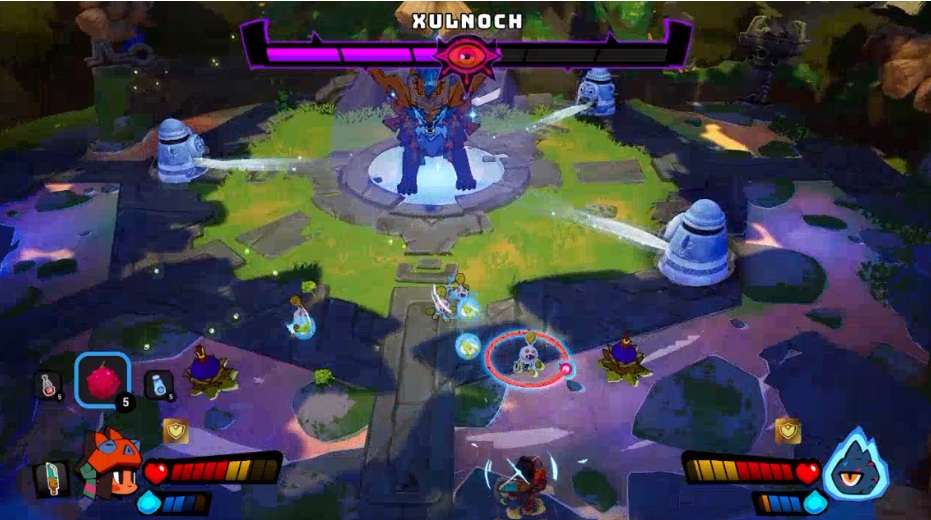
The question of whether developers are obligated to address players’ concerns is one the industry has never cleanly answered. The Romantic view would hold that once art is released, it belongs to the audience, and that the conversation between the creator and player is supposed to become part of the work itself. The practical view is harder. Studio Pixanoh is a twenty-person remote development studio, working across three continents, that just shipped its first game to a wave of crash reports and progression blockers.
In all likelihood, the studio’s silence is not indifference. They are likely drowning, trying to triage the feedback.
And yet.
Players hit with a softlock don’t experience the studio’s bandwidth limitations. They experience a game with a locked door where a story used to be. The gap between intention and execution, between the game Studio Pixanoh clearly wanted to make, and the one that shipped, is not just a technical problem. It’s an emotional one (see where I said I was sad). People feel abandoned by unfinished things. That feeling is real and justified, even when the reasons are complicated.
What do you do then, when a game gives you something real and also makes you rage quit when the jump doesn’t register? Most players will do exactly what’s evident in the reviews and discussions they will hold both things to be true simultaneously. They will recommend the art and the atmosphere, and also try to temper your expectations.
The hardest question is what happens to games that don’t fulfill their potential. Some get patched into the versions they should have been (I’m looking at you, No Man’s Sky), but that can take years. Others get a few updates and are quietly left alone, left to garner mixed reviews and eventually become artifacts of “What Might Have Been” (I’m still thinking about Dream Cycle from 2022, released from EA and abandoned in less than a month).
The window in which a game can recover its reputation is not infinite. For Studio Pixanoh, that window is open right now, but narrowing quickly. Town of Zoz has something, a point of view, a world that feels like it was made by people who cared, a good story. These are rarer than smooth combat.
The obligation of an artist to their art, if you accept there is one, might simply be to not let the magnitude of something that can be fixed overpower the thing that can’t be faked.
Overall
Writing this, I also need to really ground myself in the purpose of a review, which is to help someone decide if they are going to spend their money on a game.
I don’t want to give this game an overall score, because how can I? But I can recommend that you don’t spend your money on it at this time, but that you do watch for updates. I’m crossing my fingers that the developers figure it out. Because this game is three-soulled and it shouldn’t be shunned for its nature.
Fix jumping, adjust combat, and patch the bugs.
Town of Zoz is available for PC via Steam.
Related: Reviews by Lord Tevildo

Equal-opportunity gamer goblin.
Completionist role-player, lore-lover, stealth archer for life.
I review games by intent, audience, and design, not marketing or hype. I forgive ambition and value games that trust the player to think.
Big nerd. No apologies.






More Stories
FAREVER Online Fantasy ARPG Nightling Invasion Content Update Coming to Steam Early Access July 15
Rise of the Tomb Raider: 20 Year Celebration Review for Nintendo Switch 2
LIFE BELOW Review for Steam