
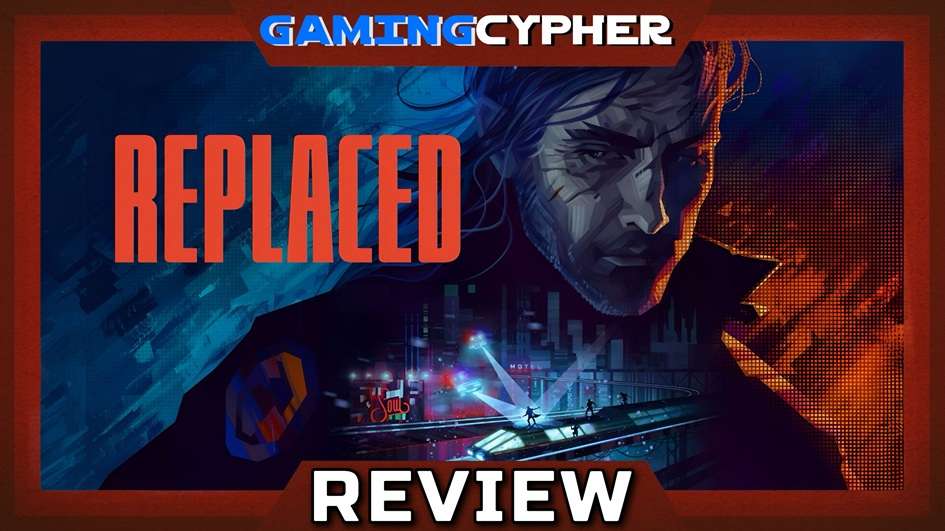
“Replaced” Review by Nick Navarro
Flickering neon lights and the hum of a broken future set the stage long before I ever threw a punch in “Replaced.” From the moment I stepped into its alternate 1980s America, it was clear that Sad Cat Studios wasn’t just chasing a vibe, they were meticulously crafting one. What surprised me most wasn’t just how good it looks, but how confidently it balances style with substance, even when a few cracks begin to show.
“Replaced” casts you as R.E.A.C.H., an artificial intelligence forced into the human body of its own creator, Warren Marsh. It’s a somewhat timely premise that immediately leans into questions of identity and autonomy, and while the broader beats of its narrative aren’t entirely unfamiliar within the cyberpunk genre, the way it presents them feels thoughtful and deliberate. Phoenix-City, the game’s primary setting, is a decaying corporate stronghold where power is hoarded, lives are expendable, and every alley seems to whisper a different story. I found myself drawn into its world not just because of what was happening, but because of how convincingly it was portrayed. A huge part of that immersion comes from the game’s visual design. The 2.5D pixel art here is nothing short of stunning, blending retro aesthetics with modern lighting and effects to create something that constantly feels alive. Rain-slicked streets reflect neon signage, industrial zones feel heavy and oppressive, and quieter moments in the hub areas offer a welcome contrast that helps ground the experience. It’s one of those games where I’d occasionally stop moving just to take in the scene, which isn’t something I do often.
Gameplay-wise, “Replaced” walks a careful line between cinematic platforming and action-driven encounters. Movement feels fluid as you navigate its 2.5D spaces, shifting between foreground and background layers to solve environmental puzzles and uncover hidden upgrades. These sections are generally engaging, though I did run into moments where readability became an issue, particularly when trying to quickly parse depth or timing during more demanding platforming segments, general movement can also at times feel a little sluggish. Combat, on the other hand, is where the game truly shines. The free-flow system is incredibly satisfying, built around well-timed dodges, parries, and counterattacks. Visual indicators above enemies help guide your reactions without feeling overly intrusive, and successfully chaining defensive maneuvers into powerful finishing moves never stopped being rewarding. It was like playing a “Batman Arkham” game, but the camera is just placed in a different spot. There’s a rhythm to it that clicked with me early on, and once it did, I found myself actively seeking out encounters just to engage with the system again.
That said, the combat isn’t without its drawbacks. Over time, some repetition does begin to creep in, and while new enemy types and scenarios attempt to mix things up, the core loop doesn’t evolve quite as much as I would’ve liked. It never becomes dull, but it does occasionally lose some of that initial spark. Exploration is supported by a central hub area where R.E.A.C.H. can interact with other characters, learn more about the world, and take on optional side quests. These moments add texture to the narrative and help flesh out the game’s themes, particularly as R.E.A.C.H. grapples with unfamiliar human emotions. There’s a quiet tension in these interactions that I appreciated, even if they sometimes felt like they were building toward something deeper than what was ultimately delivered.
One aspect that consistently pulled me out of the experience, though, was the lack of voice acting. All dialogue is presented through text boxes, and while the writing itself is solid, the absence of voiced performances makes the world feel smaller than it should. In a game so clearly focused on cinematic presentation and emotional weight, having characters speak aloud could have elevated key moments significantly. It’s not a dealbreaker, but it is noticeable, and at times, a missed opportunity. Pacing is another area where “Replaced” occasionally stumbles. The transition between gameplay and narrative beats doesn’t always feel as smooth as the rest of the experience, leading to moments where the story either lingers too long or moves too quickly past something that deserved more attention. Combined with the occasional control hiccup during platforming, these issues can briefly disrupt the otherwise strong flow.
Even with those shortcomings, I kept coming back to how much “Replaced” gets right. There’s a clear sense of passion behind every element, from its art direction to its combat design, and that passion carries the experience through its weaker moments. It’s the kind of game that might frustrate you in small ways, but still leaves a lasting impression because of how cohesive its vision is. By the time I reached the end, I found myself reflecting less on the individual issues and more on the overall journey. “Replaced” may not redefine the genre, but it confidently carves out its own space within it. For fans of cinematic platformers and cyberpunk storytelling, this is an experience that’s easy to recommend, one that lingers in your mind thanks to its atmosphere, its ideas, and the world it so vividly brings to life.
8/10
For more information, visit Steam.
Related: Nick Navarro Reviews

Gaming since I was given an original Nintendo as a kid. I love great storytelling and unique ingenuity. When both collide in a single game, I'm a happy gamer. Twitter/IG @NickNavarro87



More Stories
Resonance: A Plague Tale Legacy Preview for Steam
Fatshark Launches Skitarii Class for Warhammer: 40,000 Darktide Plus the Live Dark Rites Event
tinyBuild Announces that New Multiplayer FPS with Mechs, SAND: Raiders of Sophie, Now Out on Steam Early Access