
“The Long Road Back: Where ‘Overwatch’ Stands in 2026” An Editorial by Nick Navarro
There was a time when Overwatch didn’t just feel like another multiplayer game, it felt like THE multiplayer game. When it launched in 2016, Blizzard’s hero shooter quickly carved out a space that competitors struggled to replicate, blending tight FPS mechanics with MOBA-inspired abilities and a cast of characters that players didn’t just pick, but genuinely connected with. For a few years, it felt untouchable. But the version of Overwatch that exists today has taken a long, winding path to get here, and for a while, it wasn’t entirely clear if it would ever find its footing again.
In 2022, Blizzard released “Overwatch 2,” a follow-up that shifted the game into a free-to-play, live-service model built around seasonal updates and battle passes. On paper, this was a major evolution. In practice, it felt more like a restructuring than a true sequel. The transition brought meaningful changes, 5v5 gameplay replacing 6v6, a renewed content cadence, and a monetization system aligned with modern live-service expectations, but the core experience remained strikingly familiar. For many players, the “2” in the title felt less like a new chapter and more like a label applied for business reasons. It was still Overwatch, just repackaged. That perception lingered, and it mattered. Because while Blizzard was trying to redefine its flagship shooter, the rest of the industry wasn’t standing still.
Competition has always existed, but things escalated when “Marvel Rivals” entered the scene. The comparisons were immediate and unavoidable. A team-based hero shooter built around recognizable characters, clearly inspired by Overwatch’s structure, but wrapped in the massive appeal of Marvel’s universe. Whether labeled a “clone” or a “competitor,” Marvel Rivals did something important: it reminded players what felt exciting about the hero shooter formula, while also highlighting where Overwatch had grown stagnant. New energy, new characters, and a fresh presentation made it easier for players to drift away, especially those who already felt disconnected from Blizzard’s direction. For the first time in years, Overwatch wasn’t just competing, it was reacting.
At the same time, the broader industry was undergoing significant upheaval. Following Microsoft’s acquisition of Activision Blizzard, widespread layoffs impacted multiple studios, including Blizzard Entertainment. These cuts affected developers across teams and projects, contributing to an already uncertain period for Overwatch’s future. For us the players, it raised difficult questions: Who was still steering the ship? And what did long-term support really look like? For a live-service game, consistency and trust are everything, and during this period, both felt fragile.
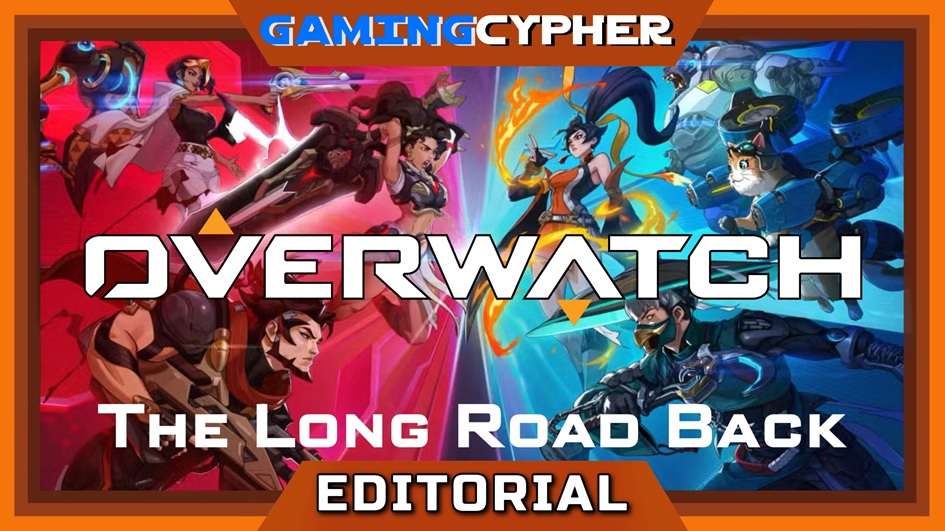
Then came February 2026. Blizzard announced “Overwatch Season 1: Conquest,” which launched on February 10th, alongside a decision that felt as symbolic as it was practical: the game would drop the “2” and return to simply “Overwatch.” It wasn’t just a name change; it was a reset. After years of trying to justify the sequel branding, Blizzard instead embraced what players had been saying all along: this was always Overwatch. The focus shifted away from redefinition and toward reinvention within a familiar identity. And with that reset came one of the most ambitious updates the game has seen in years.
Season 1: Conquest introduced a wave of content and systemic changes designed to reshape how Overwatch plays, progresses, and tells its story. Five new heroes, Jet Pack Cat, Anran, Domina, Emre, and Mizuki, joined the roster, marking one of the largest single expansions of playable characters since the game’s early years. More importantly, these additions weren’t isolated drops; they were tied directly into a broader narrative push. At the center of the season was the “Reign of Talon” storyline, a renewed focus on Overwatch’s long-dormant narrative ambitions. Instead of leaving lore in scattered cinematics and voice lines, Blizzard began integrating story elements into the structure of the game itself. The five-week Conquest event leaned heavily into this idea. You got to choose between two factions, Overwatch or Talon, and completed weekly challenges that contributed to a larger, evolving conflict. It wasn’t a full narrative campaign, but it was a step toward making the world feel active again.
Not everything landed without friction, though. Of the five new heroes, Anran became the center of the most noticeable controversy during the season, with portions of the community criticizing aspects of the character’s visual design, primarily her face looking too similar to several other characters. It wasn’t a gameplay issue, but in a series where character identity has always been front and center, even aesthetic choices carry weight. To Blizzard’s credit, the response was swift and measured, rather than ignoring the feedback, the team confirmed that a subtle redesign for Anran would be implemented going into Season 2: Summit. It’s a small adjustment on the surface, but it reinforces a larger point: this version of Overwatch appears far more willing to react and adapt in real time. And for a game that built its early reputation on character and world-building, that shift matters.
Beyond content, Conquest introduced one of the most meaningful gameplay overhauls in years: the sub-role system. Previously, Overwatch divided heroes into three broad roles, Tank, Damage, and Support. With the new system, those roles are further split into specialized sub-roles like Bruiser, Initiator, and Stalwart, each with unique passive abilities. This change does two important things. First, it adds mechanical depth without fundamentally altering the game’s identity. Second, it creates clearer distinctions between heroes within the same role, encouraging more strategic team compositions. Additional hero passives, such as self-healing for Medic-type characters or movement-based regeneration for Survivors, further reinforce this direction. The result is a game that feels more layered, but still immediately recognizable. Competitive play also saw adjustments, including a rank reset and a structured mid-cycle event offering exclusive rewards. These changes aim to keep the competitive scene active throughout the season rather than front-loading engagement at launch.
If there’s a single theme that defines this new era of Overwatch, it’s responsiveness. For years, one of the most consistent criticisms from the community was that Blizzard wasn’t listening, or at least not reacting quickly enough. Content droughts, unclear direction, and abandoned features (like the originally promised PvE mode, which I’m still very sad about) created a disconnect between developers and players. Season 1: Conquest doesn’t erase that history, but it does signal a course correction. The renewed emphasis on story, the willingness to rethink core systems, and even the decision to drop the “2” all reflect a studio that’s paying closer attention to how its game is perceived. It’s not just about adding content, it’s about rebuilding trust.
With Season 2: Summit now underway, the real test begins. The question is no longer whether Overwatch can change, it’s whether it can sustain that change. Live-service games don’t succeed on a single strong update; they succeed on consistency, momentum, and a clear sense of direction. Right now, for the first time in a while, Overwatch feels like it has all three. Overwatch’s journey over the past few years hasn’t been smooth. The transition to a live-service model was rocky, the sequel branding never fully landed, competition intensified, and internal challenges added further uncertainty. But what makes the current moment interesting isn’t just what’s changed, it’s what feels different. There’s a renewed sense of purpose. A clearer identity. A willingness to evolve without abandoning what made the game special in the first place. Overwatch doesn’t need to be something entirely new to succeed. It just needs to be the best version of itself. And for the first time in a long time, it looks like that’s exactly what Blizzard is trying to do.
You can visit the official Overwatch website.
Related: Nick Navarro Reviews
Gaming since I was given an original Nintendo as a kid. I love great storytelling and unique ingenuity. When both collide in a single game, I'm a happy gamer. Twitter/IG @NickNavarro87


More Stories
LIFE BELOW Review for Steam
GTA Online this Week Features Celebratory Discounts and Bonuses, Free Firework Launcher, Plus Much More
Corsair Cove Preview for Steam