
“Bye Sweet Carole” Review by Nick Navarro
When I first saw “Bye Sweet Carole,” I was instantly reminded of a bygone era, one where every frame of animation felt alive, hand-painted, and full of heart. It’s rare for a game to so boldly embrace the spirit of classic animation, and even rarer for it to pair that with psychological horror and emotional storytelling. Developed by Little Sewing Machine and directed by Chris Darril, “Bye Sweet Carole” feels like stepping into a forgotten Disney film that was locked away for being just a little too dark. It’s haunting, beautiful, and deeply personal, a daring artistic experiment that doesn’t always hit every note but leaves a lasting impression nonetheless.
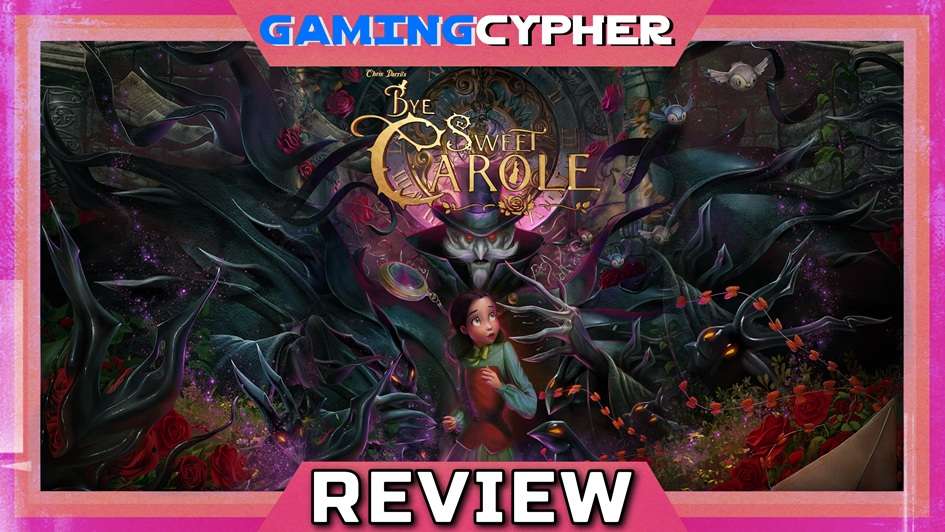
Set in early 20th-century England, the game introduces Lana Benton, a young orphan at Bunny Hall who begins searching for her missing friend, Carole Simmons. What begins as a quiet mystery in a dimly lit orphanage quickly spirals into something far stranger, a journey that bridges two worlds. On one side lies the dreary halls of Bunny Hall; on the other, the ethereal and menacing kingdom of Corolla. Both places are filled with life, death, and a certain dreamlike unease that keeps you questioning what’s real. As Lana, you will sneak, puzzle, and platform your way through environments that feel as if they’ve been pulled straight from an old animated reel. The first thing that truly struck me about “Bye Sweet Carole” was its art direction. Every inch of the world is hand-drawn, brimming with texture, color, and emotion. The game channels that traditional 2D look from 80s and 90s animated films—think “The Great Mouse Detective” meets “Alice in Wonderland”—but filtered through a lens of dread. The animation style doesn’t simply mimic those films; it celebrates them while adding an eerie layer of decay. Even when things get grotesque, there’s beauty in every shadow and every flicker of light. It’s not an exaggeration to say that I sometimes caught myself pausing just to take in the details, the subtle movement of a candle, the way the ink-like tar bunnies twist across the screen, or the unsettling smoothness of Mr. Kyn’s grin.
The narrative carries a quiet sadness that sits underneath the horror. It’s a story about friendship, fear, and guilt, one that doesn’t rely on jump scares but instead builds dread through suggestion. Chris Darril, best known for the “Remothered” series, once again shows his knack for weaving personal themes into unsettling backdrops. Lana’s investigation into Carole’s disappearance gradually becomes something much more symbolic, a meditation on loss and the silence that surrounds trauma. Jill Harris gives a sincere performance as Lana, and her vulnerability grounds the story in a way that makes even the more fantastical moments feel believable. Anthony Ingruber’s portrayal of the sinister Mr. Kyn, meanwhile, adds an elegant menace that lingers long after each encounter. But as stunning and emotional as “Bye Sweet Carole” is, it’s also a bit uneven in how it plays. The game blends puzzle-solving, stealth, and light platforming, and while the intention is clear, the execution doesn’t always keep up with the ambition. Controls can feel stiff, particularly during chase sequences, and the level layouts sometimes lead to frustrating trial-and-error moments. Transforming into a rabbit, a unique mechanic that adds a surreal twist, feels wonderfully imaginative at first, but it’s hindered by awkward transitions and occasionally unresponsive inputs. I appreciated what the game was aiming for, but I couldn’t help feeling that a bit more polish could have elevated these sequences into something extraordinary.
Still, there’s a kind of sincerity in how “Bye Sweet Carole” embraces its imperfections. It doesn’t try to hide them; instead, they sometimes become part of its charm. Even when I hit a few bugs or replayed a chase for the fifth time, I couldn’t bring myself to be frustrated for long. The atmosphere, the music, and the raw emotional core always pulled me back in. The score, in particular, is hauntingly beautiful; that, along with the hand-drawn visuals, creates a sense of immersion that’s hard to forget. There’s also a thematic bravery in how the game addresses its subjects. Darril doesn’t shy away from difficult ideas, bullying, control, or the suffocating silence of authority, yet he treats them with sensitivity rather than shock value. Horror becomes more than just a visual element here; it’s the emotional language of the story. By the time the credits rolled, I didn’t feel scared so much as moved, like I’d witnessed something fragile and honest trying to make sense of pain through art.
“Bye Sweet Carole” isn’t a long game. Its six-hour-ish runtime feels both brisk and fitting, offering enough time to explore its mysteries without overstaying its welcome. And while the pacing sometimes stumbles, especially during slower sections between key story moments, it ultimately serves to let the narrative breathe. The quiet moments matter just as much as the tense ones, allowing you to sit with Lana’s fear and curiosity. It’s impossible not to admire the sheer passion behind this project. Every frame screams of hand-crafted love, every detail whispers that someone cared deeply about this world. It’s the kind of game that reminds me why I value creative risk in an industry often dominated by formula. “Bye Sweet Carole” might not be flawless, but it’s bold, emotionally resonant, and refreshingly different. For players willing to look past its rough edges, there’s a hauntingly beautiful story waiting to be discovered, one that lingers long after the final scene fades.
7.5/10
For more information, visit HERE
Related: Nick Navarro Reviews

Gaming since I was given an original Nintendo as a kid. I love great storytelling and unique ingenuity. When both collide in a single game, I'm a happy gamer. Twitter/IG @NickNavarro87



More Stories
D-topia Review for PlayStation 5
The Kortz Center Heist Now Available for GTA Online
EA SPORTS College Football 27 Review for PlayStation 5